
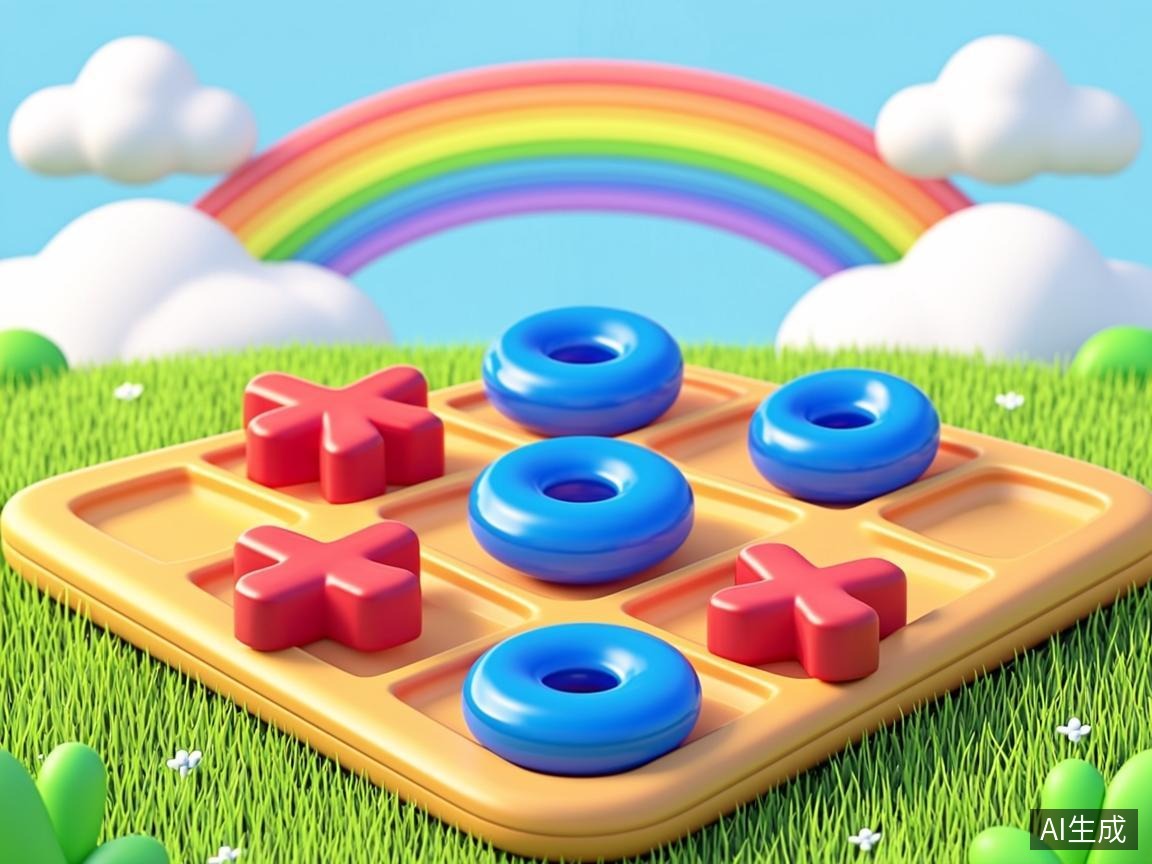
Tic-Tac-Toe
Learn English words while you play!
What is Tic-Tac-Toe?
Tic-Tac-Toe is one of the world’s most famous strategy games. Two players take turns marking spaces on a 3×3 grid. The first player to place three marks in a row — horizontally, vertically, or diagonally — wins! It may look simple, but every move teaches you to think ahead and plan carefully. As you play, you will also learn useful English vocabulary words like strategy, opponent, turn, and victory. Ready to challenge the computer? Let’s go!
Words You’ve Learned
- You play as X and the computer plays as O.
- Click any empty square to place your mark.
- Try to get three X’s in a row — across, down, or diagonally.
- Each turn reveals a new English vocabulary word!
- Change difficulty anytime: Easy, Medium, or Hard.
- Click New Game to restart at any time.
Tic-Tac-Toe — Learn English Words While You Play!
A classic strategy game turned into a powerful vocabulary-building tool for young learners.
Why Tic-Tac-Toe Is More Than Just a Game
I have been teaching English for over a decade, and if there is one thing I have learned, it is that kids learn best when they do not realize they are learning. Tic-Tac-Toe on ABCyelp does exactly that — it feels like play but quietly does the heavy lifting of education underneath.
This game teaches vocabulary through the natural rhythm of gameplay. Every turn reveals a new English word on screen. Words like strategy, opponent, turn, and victory are woven into the action. The student is focused on winning, and the vocabulary just sinks in without the resistance you see with traditional methods.
A strong vocabulary is the single best predictor of reading comprehension. When we build vocabulary through play, we remove the anxiety that accompanies word lists and spelling tests. Game-based learning taps into intrinsic motivation — students play because they want to win, not because a teacher told them to study. That internal drive is incredibly powerful.
Learning Objectives
When I introduce this game in my classroom, I have specific goals in mind:
- Vocabulary retention: Each round exposes players to new English words in context, making retention far more effective than learning from a static list.
- Spelling improvement: Seeing words repeatedly on screen reinforces correct spelling patterns across multiple rounds.
- Critical thinking: Tic-Tac-Toe requires forward planning. Players must anticipate moves and adjust their strategy, building analytical reasoning.
- Word recognition: Rapid exposure during gameplay speeds up automatic word recognition, a foundational skill for reading fluency.
- Communication skills: Discussing strategies with a partner naturally practices words like "block," "corner," "center," and "diagonal."
- Confidence building: Winning a round or learning a new word provides small, frequent confidence boosts that carry over into other English tasks.
- Sentence building: The contextual presentation of words encourages students to form sentences, especially when explaining their moves.
How The Game Works
The game board is a classic 3×3 grid. The student plays as X, the computer as O. Click any empty square to place a mark. Get three X's in a row to win. What makes this version special is that each turn reveals a new English vocabulary word. The student is focused on choosing the right square, and vocabulary enters their awareness naturally.
Three difficulty levels are available: Easy (the computer makes occasional mistakes), Medium (balanced challenge), and Hard (the computer plays optimally). I love this because I can differentiate instruction without extra prep.
The interface tracks games played, win rate, and a growing list of "Words You've Learned." Kids love seeing their word count climb. A "New Game" button, sound toggle, and fresh vocabulary keep replay value high.
English Concepts Explained
This is the section I care about most. Understanding why the game works educationally is what separates a fun activity from a genuinely effective learning tool.
Vocabulary Acquisition Through Context
When a student sees the word opponent while competing against the computer, the word is not abstract — it has meaning tied to a real experience. In my classroom, students who learn words through games use them in sentences weeks later, while students who learn from lists often forget within days. Context gives words a home in the brain.
Word Recognition and Spelling Patterns
Reading fluency depends on automaticity — recognizing words instantly without sounding them out. Each time a word appears on screen, students build automatic recognition. Many words also follow common spelling patterns: victory (ending in -y), strategy (ending in -y), opponent (ending in -ent). I often ask students what the words have in common after a few rounds.
Parts of Speech and Context Clues
The game includes words from different parts of speech: nouns like victory, verbs like block, adjectives like strategic. I have students sort words by part of speech afterward. And because words appear during gameplay, students can infer meaning from context — if the screen says "Your opponent is thinking," they figure out that opponent means the other player. This is exactly the context-clue skill standardized tests assess.
Pronunciation Awareness
The sound feature reinforces pronunciation. Hearing a word spoken aloud while seeing it builds the connection between written and spoken English, which is critical for language learners.
Difficulty Levels and How to Use Them
Beginner (Easy Mode)
I start most younger students or ESL beginners on Easy. The computer makes deliberate mistakes, so the student has a genuine chance to win. Early success builds confidence. When a student wins and sees a new word, the positive emotion gets linked to that vocabulary. For parents at home, Easy mode is perfect for beginners — let them play freely and celebrate their wins.
Intermediate (Medium Mode)
Medium mode is my go-to for most classroom groups. Students think more carefully about their moves, and this extra thinking time helps vocabulary retention. I pair students and have them discuss moves in English — phrases like "I need to block you" become natural speaking practice.
Advanced (Hard Mode)
On Hard, the computer plays nearly perfectly, and draws become common. I use this with advanced students as a warm-up or reward. One adaptation I love: having them write sentences using each new word, extending a five-minute game into a meaningful writing exercise.
Real Learning Benefits
- Active recall: Seeing a word from a previous round forces students to retrieve its meaning from memory, one of the most effective ways to strengthen long-term retention.
- Memory reinforcement: Spaced repetition across sessions moves vocabulary from short-term to long-term memory — exactly the goal of any vocabulary program.
- Focus and concentration: Tic-Tac-Toe requires sustained attention. Watching the board, planning moves, and processing vocabulary simultaneously builds concentration that transfers to reading and test-taking.
- Independent learning: The game is self-explanatory and self-paced, making it ideal for centers, early-finisher activities, or homework.
- Confidence building: Frequent wins create positive associations with English. Students who struggle start to link the language with success rather than frustration.
- Classroom engagement: I have never had a student refuse to play Tic-Tac-Toe. It is universally appealing and one of the easiest activities to introduce.
Teacher Tips
I use this game when my students need a break from worksheets but I still want meaningful learning. Here are strategies that have worked well in my classroom.
Warm-Up Activity
I often start a lesson with a quick three-round session on the projector. Students take turns at the board. Each new word becomes the "word of the day." Five minutes and the class is energized.
Vocabulary Journal Extension
After playing, students write each new word in their journal with a definition, a sentence, and a drawing. I have students compare journals with a partner and quiz each other on the words they encountered.
Pair Work and Discussion
Two students share one device. They must say the vocabulary word aloud before placing their mark. This adds a speaking component, and students are more willing to attempt pronunciation beside a peer than in front of the whole class.
Classroom Tournament
Set up a bracket tournament. Students compete in pairs while the class tracks vocabulary on a shared board. The winner adds a new word to the class wall. I do this every Friday, and students look forward to it all week.
Homework and Differentiation
Assign "play five rounds and write every new word" as homework. For differentiation, struggling learners use Easy mode with basic vocabulary, while advanced learners use Hard and write compound sentences with each word. The tool stays the same; only the task changes.
Parent Guide
First, let them play. This is not mindless screen time. Every round builds vocabulary and strategic thinking. A ten-to-fifteen-minute session encounters several new words. Try a simple routine: after school, your child plays a few rounds and tells you three new words.
Encourage your child to use new words in everyday talk. If they learned strategy, ask what strategy they used. Avoid turning the game into a test — learning happens naturally through play. Instead, ask open-ended questions like, "What was the hardest word you saw today?" or "Did any word surprise you?"
For healthy screen-time balance, use the game as part of a varied routine alongside physical activity and reading. Think of it as a vitamin — small, regular doses work best. If your child is an ESL learner, play alongside them and talk about the words together. Your involvement shows them that learning English matters to you.
Frequently Asked Questions
Is Tic-Tac-Toe really educational, or is it just for fun?
It is genuinely both. The classic structure keeps students engaged, while the vocabulary feature transforms each round into a learning opportunity. Engagement and education reinforce each other.
What age group is this game best for?
The game works well for ages 6 through 12, and I have used it successfully with older ESL students too. Younger children enjoy Easy mode, while older students appreciate the strategic challenge of Hard mode.
How many words can a student learn from this game?
Vocabulary refreshes across sessions. In ten rounds, a student might encounter eight to twelve new words. Over a week, that easily reaches fifty or more. The game tracks "Words You've Learned" so students see progress in real time.
Can I use this in a classroom with limited devices?
Absolutely. I have used it with a single computer and a projector. Students take turns at the board, and the whole class sees the vocabulary together.
How is this different from giving students a vocabulary list?
Words encountered during gameplay are tied to experiences and emotions. The brain encodes experience-based memories far more deeply than abstract information. My students remember words from this game long after forgetting textbook lists.
Is the game free to play?
Yes, the game on ABCyelp is free to play directly in the browser. No downloads or subscriptions required.
Can this help students learning English as a second language?
It is particularly effective for ESL learners. Visual context provides non-verbal cues, and seeing, hearing, and experiencing words in context addresses multiple learning pathways simultaneously.
Related Games You Might Enjoy
If your students enjoy Tic-Tac-Toe, here are other English learning games on ABCyelp that complement it:
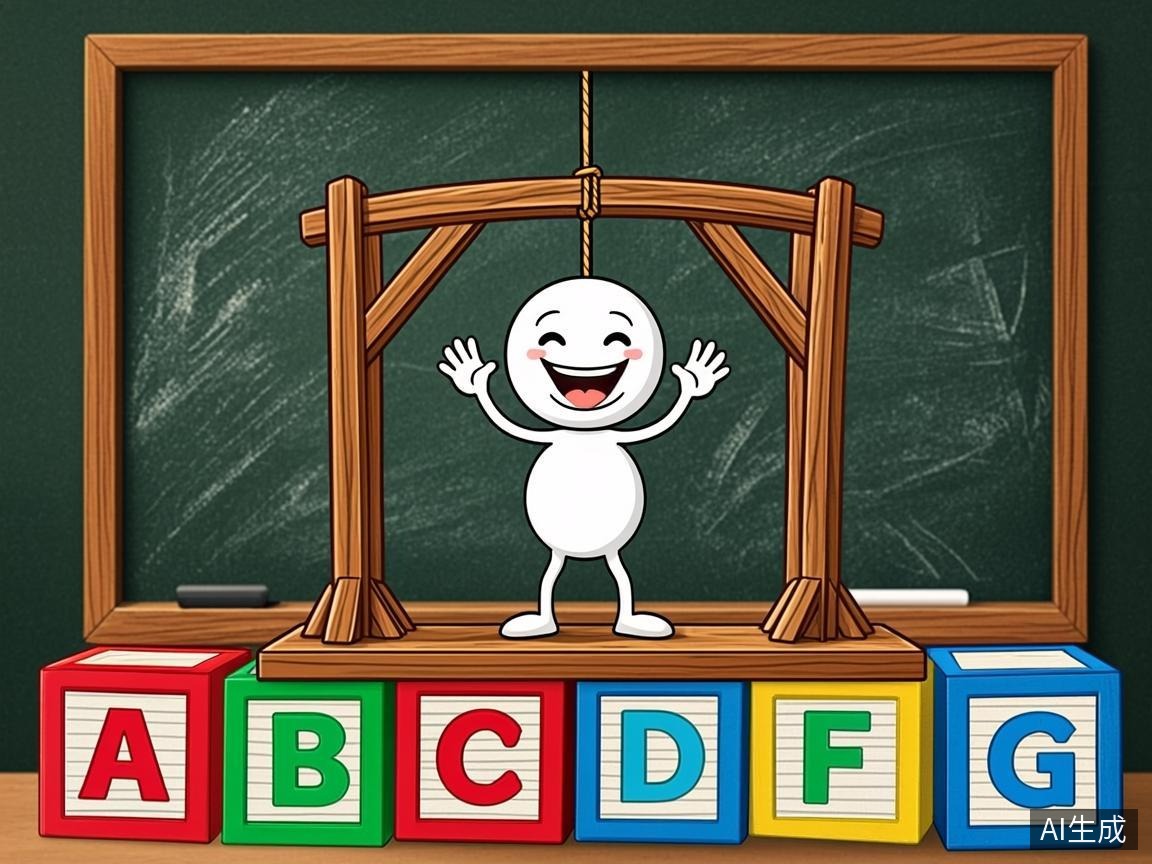
- Hangman — English Word Guessing Game — Build spelling skills and vocabulary through letter-by-letter deduction.
- Doodle Pad — Digital Whiteboard for Creative Learning — Encourage students to label, describe, and narrate artwork in English.
- Speed Math — Fun Math Learning Game — Sharpen number skills while reinforcing English math vocabulary.
Ready to Play?
Jump in and start learning English vocabulary the fun way. Every round teaches a new word — how many can you collect today?
Table of Contents
Toggle






Leave a Reply