
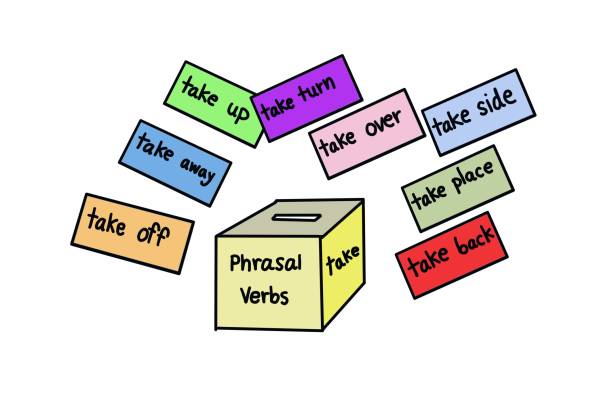
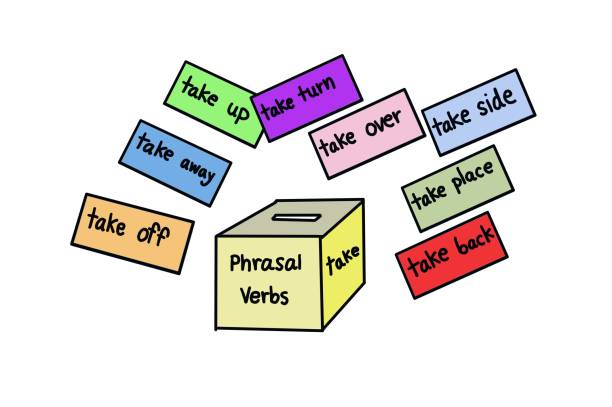
Phrasal Verbs Mastery PDF – 50 Essential Phrasal Verbs with Meanings & Examples
Boost your English fluency with the most commonly used phrasal verbs. This lesson includes clear explanations, real-world examples, and practice exercises — all in a free downloadable PDF.
Have you ever heard a native English speaker say something like “I’ll call you back later” or “Hold on a second” and wondered why the words don’t seem to match their dictionary definitions? That is because those expressions are phrasal verbs — one of the most important and widely used features of natural English. If you want to understand native speakers, enjoy movies without subtitles, and express yourself more naturally, phrasal verbs are something you absolutely need to master.
In this lesson, you will learn 50 essential phrasal verbs that intermediate English learners use every day. Each phrasal verb comes with a clear meaning, a practical example sentence, and information about whether it is separable or inseparable. At the end, you will also find practice exercises to test your understanding, plus a beautifully designed free phrasal verbs list PDF that you can download and keep for reference.
Whether you are preparing for the IELTS exam, writing an email to a colleague, or simply chatting with friends, phrasal verbs will help you communicate more naturally and confidently. Let’s get started!
What Are Phrasal Verbs?
A phrasal verb is a combination of a base verb and one or two small words (particles) — usually a preposition or an adverb — that work together to create a brand-new meaning. The meaning of the entire phrase is often completely different from the original verb on its own, which is what makes phrasal verbs so interesting and sometimes tricky for English learners to master.
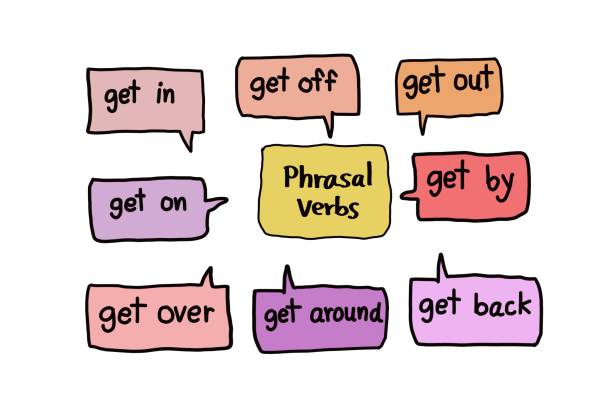
Think about the verb “get”. On its own, it simply means to obtain or receive something. But when you combine it with different particles, you get entirely different meanings:
get up = to rise from bed → “I get up at 6 a.m. every morning.”
get over = to recover from something → “It took weeks to get over the flu.”
get along with = to have a good relationship → “She gets along with all her classmates.”
As you can see, the verb “get” takes on very different meanings depending on the particle that follows it. This is why you cannot translate phrasal verbs word by word — you need to learn each combination as a unique vocabulary unit. The good news is that once you start recognizing the patterns, learning phrasal verbs becomes much easier and even enjoyable.
Treat each phrasal verb as a single vocabulary word. Instead of memorizing “get” and “up” separately, memorize “get up” as one complete unit with its own meaning. This approach will dramatically speed up your learning.
Why Are Phrasal Verbs So Important?
Phrasal verbs are not just a grammar curiosity — they are an absolutely essential part of fluent English. Here are five powerful reasons why every serious English learner should invest time in mastering them:
- They Are Everywhere in Daily English: Research shows that phrasal verbs appear in everyday spoken English more frequently than many single-word verbs. If you don’t know common phrasal verbs, you will miss a significant portion of what native speakers say in movies, meetings, and casual conversations.
- They Make You Sound More Natural: Native English speakers rarely use formal alternatives when chatting. Instead of saying “I will investigate the matter,” a native speaker will say “I’ll look into it.” Using phrasal verbs is one of the fastest ways to make your English sound more natural and less textbook-like.
- They Are Tested in Major Exams: Exams like IELTS, TOEFL, Cambridge FCE/CAE, and other standardized tests include phrasal verbs in their reading, listening, and use-of-English sections. Knowing them can significantly boost your score.
- They Unlock English Media: Movies, TV shows, podcasts, news articles, and even songs are packed with phrasal verbs. Understanding them opens up a much richer world of English content that you can enjoy without constantly reaching for a dictionary.
- They Add Variety to Your Writing: Using phrasal verbs in emails, essays, and social media posts makes your writing more dynamic and engaging. They help you avoid repeating the same formal verbs over and over.
Now that you understand why phrasal verbs matter so much, let’s look at the different types you need to know.
Types of Phrasal Verbs
Understanding the different types of phrasal verbs will help you use them correctly, especially when it comes to word order. There are four main categories you should be aware of:
1. Intransitive (No Object)
These phrasal verbs don’t take an object. They are complete on their own.
“The alarm went off at 6 a.m.”
“Please carry on with your work.”
2. Separable
These take an object that can go between or after the verb and particle. Pronouns must go in the middle.
“Turn the TV on.” / “Turn it on.”
“Pick the kids up.” / “Pick them up.”
3. Inseparable
These keep the verb and particle together. The object always comes after.
“She looks after her grandmother.”
“I ran into an old friend.”
4. Two-Particle (Phrasal Prepositional)
These have a verb + adverb + preposition. Always inseparable.
“I look forward to the holidays.”
“She gets along with everyone.”
If a phrasal verb is separable and you use a pronoun (it, them, him, her, me, us), the pronoun must always go between the verb and the particle. Say “turn it on” — never “turn on it.” This is one of the most common mistakes English learners make!
Top 50 Essential Phrasal Verbs with Meanings & Examples
Below is a carefully curated list of 50 essential phrasal verbs that every intermediate English learner should know. The table shows each phrasal verb, its meaning, whether it is separable (S) or inseparable (I), and a clear example sentence.
How to use this table effectively: Don’t try to memorize all 50 at once. Start with 5–10 per day, write your own sentences, and review them regularly. Focus on the ones you encounter most often in your daily life.
| Phrasal Verb | Meaning | Type | Example |
|---|---|---|---|
| Bring up | To mention or introduce a topic | S | Don’t bring up that topic at dinner. |
| Call off | To cancel something | S | They called off the meeting due to rain. |
| Carry on | To continue doing something | I | Please carry on with your work. |
| Come across | To find or meet by chance | I | I came across an old photo today. |
| Come up with | To think of an idea or plan | I | She came up with a great solution. |
| Cut down on | To reduce consumption | I | I’m trying to cut down on sugar. |
| Do without | To manage without something | I | We can do without a car in the city. |
| Drop off | To deliver someone or something | S | I’ll drop off the package tomorrow. |
| Figure out | To understand or solve | S | Can you figure out this problem? |
| Fill in | To complete a form | S | Please fill in this application form. |
| Find out | To discover information | S | I need to find out the truth. |
| Get along with | To have a good relationship | I | They get along with each other well. |
| Get away with | To avoid punishment | I | He got away with being late again. |
| Get over | To recover from illness/emotion | I | It took weeks to get over the cold. |
| Get up | To rise from bed | I | I usually get up at 6:30 a.m. |
| Give away | To give something for free | S | They gave away free samples at the store. |
| Give up | To stop trying or quit | S | Never give up on your dreams! |
| Go on | To continue; to happen | I | What is going on in that room? |
| Grow up | To become an adult | I | She grew up in a small village. |
| Hand in | To submit something | S | Please hand in your homework by Friday. |
| Hang out | To spend time socially | I | We like to hang out at the cafe. |
| Hold on | To wait; to grip tightly | I | Hold on a moment, please. |
| Keep up with | To stay at the same level | I | It’s hard to keep up with technology. |
| Look after | To take care of | I | She looks after her grandmother. |
| Look forward to | To be excited about the future | I | I look forward to the holidays. |
| Look into | To investigate | I | The police are looking into the case. |
| Look up | To search for information | S | You can look up the word in a dictionary. |
| Make up | To invent; to reconcile | S | He made up an excuse for being late. |
| Pass away | To die (polite expression) | I | His grandfather passed away last year. |
| Pick up | To lift; to learn naturally | S | She picked up Spanish during her trip. |
| Point out | To draw attention to something | S | He pointed out several mistakes. |
| Put off | To delay or postpone | S | Don’t put off your work until tomorrow. |
| Put on | To wear clothing; to activate | S | Put on your coat; it’s cold outside. |
| Put up with | To tolerate something unpleasant | I | I can’t put up with this noise! |
| Run into | To meet by chance | I | I ran into an old friend at the mall. |
| Run out of | To have none left | I | We ran out of milk this morning. |
| Set up | To establish or arrange | S | They set up a new company last year. |
| Show up | To arrive or appear | I | He didn’t show up for the meeting. |
| Take after | To resemble a parent | I | She takes after her mother in looks. |
| Take off | To remove; (plane) to depart | S | Please take off your shoes at the door. |
| Take over | To gain control of something | S | The new manager took over last month. |
| Think over | To consider carefully | S | I need time to think over your offer. |
| Throw away | To discard or put in trash | S | Don’t throw away those bottles. |
| Try on | To wear to test the fit | S | Can I try on this shirt, please? |
| Turn down | To reject or refuse | S | She turned down the job offer. |
| Turn into | To become something else | I | The caterpillar turned into a butterfly. |
| Turn on | To start a machine or light | S | Please turn on the air conditioner. |
| Turn up | To arrive; to increase volume | S | He turned up an hour late. |
| Work out | To exercise; to resolve | S | We worked out our differences. |
Phrasal Verbs Organized by Category
One of the most effective ways to learn phrasal verbs is to group them by theme. When your brain connects related words together, it creates stronger memory links, making the verbs much easier to remember and use naturally. Here are the 50 phrasal verbs organized into six practical, everyday categories:
🗣️ Communication & Speaking
- Bring up — Don’t bring up that topic at the meeting.
- Come up with — She came up with a brilliant idea during the brainstorm.
- Point out — He pointed out the error in the report politely.
- Hold on — Hold on, let me check that information for you.
💼 Work & Study
- Call off — They called off the project meeting due to bad weather.
- Carry on — Carry on with what you were doing before I arrived.
- Figure out — We need to figure out a better strategy for next quarter.
- Hand in — Hand in your essay by Monday at the latest.
- Keep up with — It’s hard to keep up with the latest technology trends.
- Look into — We will look into the customer complaint immediately.
- Set up — She set up a new training program for the team.
- Take over — He took over the department after the manager retired.
- Work out — We worked out a compromise that satisfied everyone.
🤝 Relationships & Social Life
- Get along with — Do you get along with your new neighbors?
- Hang out — Let’s hang out at the new coffee shop this weekend!
- Look after — Who looks after the kids when you’re at work?
- Make up — They had a fight but made up quickly afterward.
- Run into — I ran into my old teacher at the supermarket yesterday.
- Take after — He takes after his grandfather in both appearance and personality.
🏠 Daily Life & Movement
- Drop off — Can you drop me off at the train station?
- Get up — What time do you usually get up on weekends?
- Get over — She is slowly getting over her fear of flying.
- Go away — The pain went away after I took the medicine.
- Grow up — Where did you grow up before moving to the city?
- Pick up — I’ll pick up some groceries on my way home tonight.
- Put on — Put on your jacket before going outside — it’s freezing!
- Show up — Why didn’t he show up at the party last night?
- Turn up — She turned up at my door completely unannounced.
🧠 Thinking & Deciding
- Find out — I found out the truth about the surprise party yesterday.
- Give up — Don’t give up just because the task seems difficult at first.
- Think over — I need a few days to think over your business proposal.
- Turn down — She turned down the job offer because the salary was too low.
- Do without — We can do without dessert tonight and save some calories.
🛒 Shopping, Money & Objects
- Fill in — Please fill in the registration form before the deadline.
- Give away — They gave away free books at the community event.
- Look up — Look up the price of that laptop online before you buy it.
- Put off — Don’t put off paying your bills — late fees add up quickly.
- Put up with — I won’t put up with such terrible customer service.
- Run out of — We ran out of bread, so I need to go to the bakery.
- Throw away — Please throw away those old newspapers in the recycling bin.
- Try on — You should try on both the blue and the red one to compare.
Proven Tips for Learning Phrasal Verbs Faster
Learning phrasal verbs can feel overwhelming at first because there are literally thousands of them in the English language. However, with the right strategies and a consistent approach, you can build a strong phrasal verb vocabulary much faster than you might think. Here are seven proven techniques that successful language learners swear by:
- Learn Them in Full Sentences: Never memorize a phrasal verb in isolation. Always learn it as part of a complete sentence so your brain associates it with natural context. When you encounter a new phrasal verb in a movie or conversation, write down the entire sentence and review it later. The context acts as a memory anchor that makes the meaning stick.
- Group Them by Theme or Situation: As you saw in the categorized section above, organizing phrasal verbs by topic (work, travel, relationships, etc.) makes them significantly easier to remember. Your brain stores related information in clusters, so thematic grouping creates powerful memory connections.
- Use Spaced Repetition Flashcards: Create digital flashcards with the phrasal verb on one side and the meaning plus example on the other. Apps like Anki or Quizlet use spaced repetition algorithms that show you cards right before you’re about to forget them, which is incredibly efficient for long-term retention.
- Write Your Own Sentences Daily: After learning new phrasal verbs, challenge yourself to write three original sentences using each one. Try to make the sentences personal and relevant to your own life. Active production — using the language yourself — is far more effective than passive recognition alone.
- Watch English Media Actively: Turn on English subtitles when watching movies or YouTube videos. Every time you spot a phrasal verb, pause, repeat the sentence out loud, and write it down. This trains both your listening comprehension and your speaking ability simultaneously.
- Keep a Phrasal Verb Notebook: Dedicate a small notebook or a note on your phone specifically for phrasal verbs. Organize them alphabetically or by theme, and include the meaning, type (separable/inseparable), and your own example sentence. Review this notebook for just 5 minutes a day.
- Start with the Most Common Ones: Focus your energy on the 50 phrasal verbs in this lesson first. Research consistently shows that the most frequently used phrasal verbs cover the vast majority of everyday situations. Once you’ve mastered these, you can gradually expand your vocabulary with more specialized or advanced phrasal verbs.
Consistency beats intensity. Studying 5–10 new phrasal verbs every day for 15 minutes is far more effective than cramming 50 in one session. Small, regular study sessions build lasting knowledge, while cramming leads to quick forgetting.
Practice Exercises
Ready to test what you’ve learned? Try these exercises without looking back at the tables above. Then check your answers using the button below each exercise.
Exercise 1: Fill in the Blanks
Choose the correct phrasal verb to complete each sentence:
(called off / figure out / get over / gave away / put off / ran into / show up / turned down)
- The outdoor concert was ____________ because of the heavy rain.
- I can’t ____________ why she didn’t come to the party.
- It took her a long time to ____________ her illness.
- The store ____________ free cookies to attract more customers.
- Stop ____________ your homework and start working on it now!
- I ____________ an old classmate while walking in the park.
- What time did the guests ____________ at the wedding reception?
- She ____________ the scholarship because she wanted to stay closer to home.
- called off
- figure out
- get over
- gave away
- putting off
- ran into
- show up
- turned down
Exercise 2: Match the Meanings
Match each phrasal verb with its correct definition:
- Look forward to — ?
- Carry on — ?
- Call off — ?
- Find out — ?
- Look after — ?
- Take after — ?
- Run into — ?
- Put up with — ?
A. To cancel B. To continue C. To discover D. To take care of
E. To be excited about F. To resemble G. To tolerate H. To meet by chance
1–E 2–B 3–A 4–C 5–D 6–F 7–H 8–G
Exercise 3: Rewrite the Sentences
Replace the underlined words with a suitable phrasal verb from this lesson:
- The meeting was canceled due to bad weather.
- She discovered the truth about the surprise party.
- Please continue reading your book — I’ll be right back.
- He rejected the job offer because the salary was too low.
- I encountered an old friend at the airport last week.
- The meeting was called off due to bad weather.
- She found out the truth about the surprise party.
- Please carry on reading your book — I’ll be right back.
- He turned down the job offer because the salary was too low.
- I ran into an old friend at the airport last week.
Frequently Asked Questions About Phrasal Verbs
How many phrasal verbs do I need to know?
For intermediate learners (B1–B2 level), knowing about 100–150 common phrasal verbs is a solid goal. This lesson covers 50 of the most essential ones, which already covers a huge percentage of everyday usage. As you advance to C1 and C2 levels, you can expand to 300 or more, but the most important thing is to know the common ones deeply rather than many of them superficially.
What is the difference between separable and inseparable phrasal verbs?
A separable phrasal verb allows the object to go between the verb and the particle (for example, “turn the TV on” or “turn on the TV”). An inseparable phrasal verb keeps the verb and particle together, with the object always after (for example, “look after the kids,” never “look the kids after”). When using pronouns with separable verbs, the pronoun must always go in the middle — say “turn it on,” never “turn on it.”
Are phrasal verbs formal or informal?
Most phrasal verbs are more common in informal and spoken English. In formal writing (academic papers, legal documents, official reports), people often prefer single-word alternatives (for example, “investigate” instead of “look into,” or “postpone” instead of “put off”). However, some phrasal verbs are perfectly acceptable in semi-formal contexts, such as business emails and presentations. Knowing when to use formal versus informal language is part of developing fluency.
How can I practice phrasal verbs every day?
The best daily practice routine involves a mix of input and output. Start your day by reviewing 5 flashcards. During the day, listen for phrasal verbs in English podcasts or videos and note down any new ones you hear. In the evening, write 3–5 sentences using the phrasal verbs you learned that day. This combination of review, exposure, and active use creates a powerful learning cycle that leads to lasting retention.
Download Your Free Phrasal Verbs Mastery PDF
Master this lesson in minutes — download your beautifully designed PDF now!
- 50 essential phrasal verbs with clear meanings and example sentences
- Organized by category for faster learning and better memory retention
- Includes practice exercises with an answer key to test your knowledge
- Clean, colorful design perfect for printing or studying on your device
- 100% free — no registration or email required
Table of Contents
Toggle






Leave a Reply