ABCyelp.com
English Learning
Guide Headings
Section headings for all four ABCyelp.com learning guides
Listening Vocabulary Grammar Spelling
The Complete Guide to English Listening
https://abcyelp.com/listening/
- Why English listening is difficult
- The most important listening rules and patterns
- Common listening mistakes learners make
- How to improve listening skills faster
- Listening tips for kids and adults
- ESL listening strategies
- Listening comprehension for different accents
- Listening test and exam preparation tips
- Frequently asked questions about English listening
The Complete Guide to English Vocabulary
https://abcyelp.com/vocabulary/
- Why building English vocabulary is difficult
- The most important vocabulary learning rules
- Common vocabulary mistakes learners make
- How to expand vocabulary faster
- Vocabulary tips for kids and adults
- ESL vocabulary building strategies
- Academic and professional vocabulary methods
- Vocabulary quiz and competition preparation tips
- Frequently asked questions about English vocabulary
The Complete Guide to English Grammar
- Why English grammar is difficult
- The most important grammar rules
- Common grammar mistakes learners make
- How to improve grammar faster
- Grammar tips for kids and adults
- ESL grammar strategies
- Visual and multi‑sensory grammar methods
- Grammar test and exam preparation tips
- Frequently asked questions about English grammar
The Complete Guide to English Spelling
Complete English Learning Guide: How to Learn Listening, Vocabulary, Grammar & Spelling Together
After more than ten years of teaching English as a second language to learners from every background imaginable, I can tell you one thing with absolute confidence: nobody struggles with English because they’re not smart enough. They struggle because nobody ever showed them how all the pieces fit together. English listening, vocabulary, grammar, spelling — these aren’t four separate subjects you tackle one at a time. They’re interconnected parts of one living system, and when you understand how they feed into each other, everything gets easier. Not easy — I’m not going to pretend that — but easier. And a lot more rewarding.
I built this guide because I kept seeing the same cycle repeat itself with every new class. A student would pour all their energy into grammar worksheets, neglect listening entirely, and then wonder why they couldn’t understand a word anyone was saying. Or they’d memorize hundreds of vocabulary words but spell half of them wrong on their essays. The problem wasn’t effort. It was strategy. So this page is my answer — a single resource where you can see the whole picture, understand where you are right now, and figure out your next step. Think of it as the conversation we’d have if you walked into my classroom and asked, “How do I learn English effectively?”
The 4 Biggest Struggles English Learners Face
Let me tell you what I see every week in my classroom, because chances are you’ll recognize yourself in at least one of these. The most common pattern? Students focus on one skill and ignore the rest. They study grammar for hours but freeze when a native speaker talks at normal speed. Or they can read beautifully but can’t write a coherent paragraph to save their lives. This imbalanced approach is the single biggest progress-killer I encounter, and it’s usually not the student’s fault — it’s how most ESL courses are structured.
1. English Listening Overwhelm
Listening comprehension is probably the number one complaint I hear from English learners. “People talk too fast.” “I understand when I read it, but not when I hear it.” “I can’t catch the words.” Sound familiar? That’s because listening is a real-time skill — you don’t get to pause, re-read, or look things up. The audio keeps going whether you’re ready or not, and that creates a kind of pressure that shuts people down. If you’re struggling with this, our Complete Guide to English Listening breaks down exactly how to train your ear step by step.
2. The Intermediate Vocabulary Plateau
Vocabulary plateaus hit almost every learner around the intermediate level. You learn your first couple thousand words quickly because they’re everywhere — in every textbook, every conversation, every TV show. But then progress slows to a crawl because the next few thousand words are less frequent, more nuanced, and harder to encounter naturally. Students tell me they feel stuck, like they’re running in place. Our Complete Guide to English Vocabulary addresses this plateau with strategies that actually work.
3. Grammar Anxiety and the “Play-It-Safe” Trap
Grammar anxiety is something I deal with constantly. People are terrified of making mistakes, so they play it safe — using only simple sentences, avoiding anything they’re not 100% sure about. The result? They never stretch, never practice the structures that would actually push them forward. It’s a self-fulfilling prophecy: fear of being wrong keeps you from getting better. I dive into solutions for this in our Complete Guide to English Grammar.
4. English Spelling — The Quiet Disaster
And then there’s English spelling, which a lot of learners just give up on. English spelling is famously inconsistent — same sound, five different spellings, or same spelling, three different pronunciations. But bad spelling undermines everything: it makes your writing look careless, it hurts your exam scores, and it even affects how well you remember vocabulary, because the visual memory of a word is part of how you store it long-term. Our Complete Guide to English Spelling shows you that spelling is more logical than it seems.
Teacher Insight: After years of watching students struggle with the same issues, I can say this with certainty: the ones who improve their English fastest are the ones who work on all four skills together, even if it means progressing more slowly in any single area. Balanced practice beats hyper-focus every time.
English Learning Roadmap by CEFR Level (A1–C1)
Here’s the roadmap I use with my students. It’s organized by CEFR level, and it shows you exactly what to focus on at each stage across all four skill areas. The key principle is balance — you should be working on listening, vocabulary, grammar, and spelling simultaneously, not sequentially. They reinforce each other, and that mutual reinforcement is what makes the whole process faster.
| CEFR Level | Listening Focus | Vocabulary Focus | Grammar Focus | Spelling Focus |
|---|---|---|---|---|
| A1 Beginner | Recognize individual words in slow speech | 500 most common English words | Present simple, pronouns, basic questions | Phonics, short vowel patterns |
| A2 Elementary | Follow short conversations on familiar topics | 1,000–2,000 words, everyday phrases | Past simple, continuous, adjectives | Common spelling rules, sight words |
| B1 Intermediate | Understand main points of clear standard speech | 2,000–4,000 words, idioms begin | Present perfect, conditionals, passive voice | Prefixes, suffixes, word families |
| B2 Upper-Intermediate | Follow extended speech, some accents | 4,000–6,000 words, academic vocabulary | Advanced modals, reported speech, wish | Silent letters, irregular patterns |
| C1 Advanced | Near-native comprehension, rapid speech | 8,000+ words, nuance and connotation | Inversion, cleft sentences, register | Etymology, advanced patterns |
Don’t look at this table and feel overwhelmed. You’re not supposed to master a whole row in a week. This is your compass, not your deadline. Wherever you are right now, that’s your starting point.
How Listening, Vocabulary, Grammar & Spelling Connect
I want to spend some time here because this is the part most English learning guides skip. They treat listening, vocabulary, grammar, and spelling as separate lanes on a highway, but that’s not how language actually works. These four skills are deeply interconnected, and understanding the connections is like discovering a shortcut to English fluency.
Listening Fuels Vocabulary Growth
When you hear a new word in context — in a conversation, in a video, in an English learning game — you absorb it differently than when you read it on a flashcard. Your brain stores the sound, the situation, and the emotion along with the meaning. That’s why words learned through listening tend to stick better and come back to you faster in conversation. I always tell my students: if you want a bigger English vocabulary, start by listening more. Our Complete Guide to English Listening goes deep into how to build vocabulary through listening practice.
Vocabulary Makes Grammar Useful
Grammar without vocabulary is like having a beautifully engineered car with no fuel. You can know every English tense and every rule, but if you don’t have the words to fill those structures, you can’t say anything meaningful. That’s why I recommend learning vocabulary and grammar in tandem — when you learn a new grammar structure, immediately learn five new words that work with it. Learning the past simple? Great, now learn ten common irregular verbs to go with it. This approach makes grammar feel functional rather than abstract.
Grammar and Spelling Share Hidden Patterns
Here’s something a lot of English learners don’t realize: many spelling patterns in English are actually grammar patterns in disguise. The “-ed” ending on regular past tense verbs always spells the same way, even though it sounds like three different things (t, d, or id). The “-ing” form is always spelled the same. Understanding the grammar gives you a framework for spelling, and paying attention to spelling reinforces your grammar. Our Complete Guide to English Grammar and Complete Guide to English Spelling both cover these overlaps in detail.
Spelling Locks In Vocabulary
When you can spell a word correctly, you’ve essentially mastered its visual form. That visual memory becomes another retrieval pathway — another way your brain can access that word when you need it. Students who skip spelling practice often find that words feel “fuzzy” — they recognize them when reading but can’t produce them in writing. Taking the time to learn English spelling properly is an investment that pays dividends across every other skill.
Why Interactive Games Help You Learn English Faster
I spent my first few years of ESL teaching doing what most teachers do — lectures, worksheets, textbook exercises. And the results were frustrating. Students would perform well on Friday’s quiz and forget everything by Monday. Or worse, they’d pass the written tests but still struggle in actual English conversations. Something fundamental was missing.
What was missing was active engagement. Passive learning — reading grammar rules, studying word lists, watching explanations — only activates one part of your brain. It creates shallow memory traces that fade quickly. But when you’re actively doing something — making choices under time pressure, competing for a score, trying to beat your own streak — your brain encodes the information much more deeply. The emotion of the experience becomes part of the memory.
This isn’t just my observation. Research on game-based language learning consistently shows stronger retention, faster recall speed, and significantly lower learner anxiety. And that last point matters more than people think. Anxiety is the silent killer of language progress. When you’re stressed about being wrong, your brain’s language-processing centers literally function less efficiently. Games remove that barrier because mistakes become part of the process rather than something to be ashamed of.
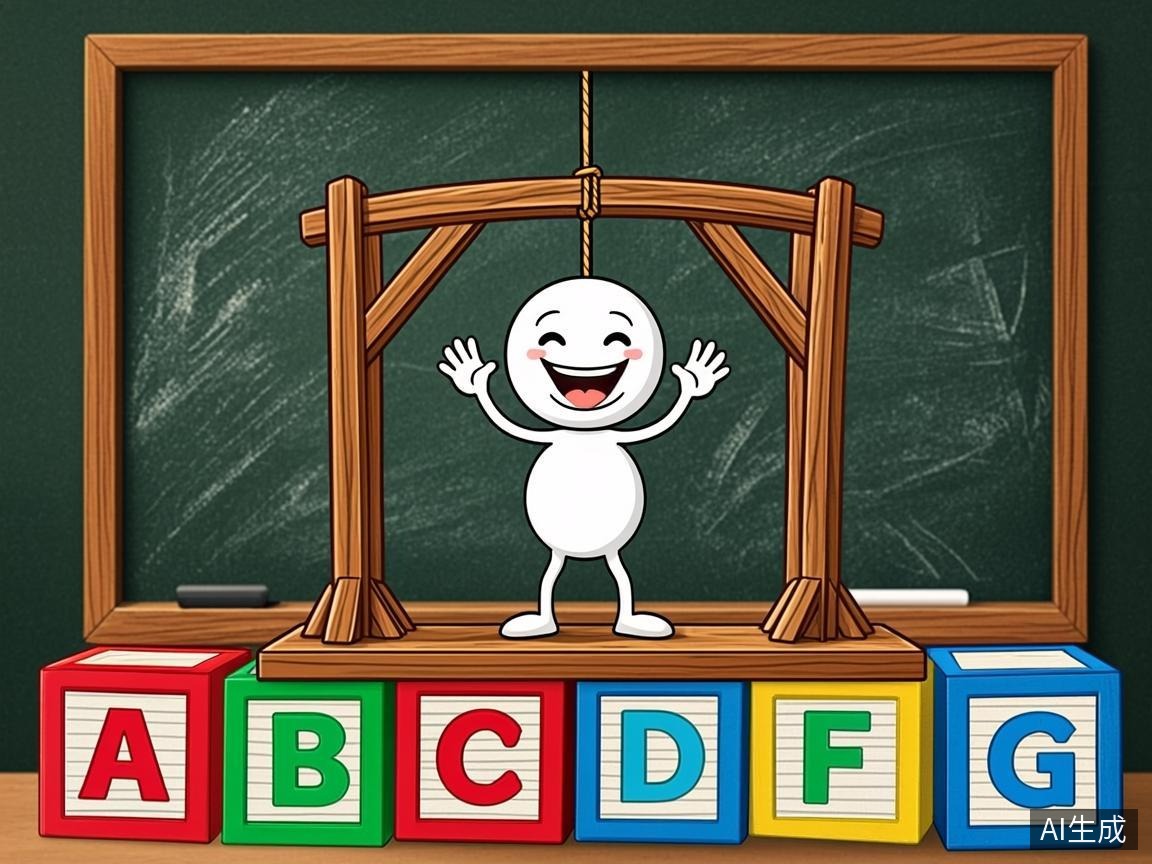
That’s exactly why ABCYelp exists — to give English learners a place where practice feels like play rather than punishment. Whether it’s a vocabulary-building game like Tic-Tac-Toe, a listening comprehension challenge, or a spelling game like Hangman, the principle is the same: learn by doing, get immediate feedback, and enjoy the process enough that you actually want to come back tomorrow.
- Active recall (pulling information from memory) is 2–3x more effective than re-reading for long-term retention
- Spaced repetition — reviewing at gradually increasing intervals — prevents the natural forgetting curve
- Game mechanics like scoring and streaks activate dopamine pathways, making practice intrinsically rewarding
- Low-stakes environments reduce the affective filter, meaning your brain processes English more efficiently
- Multi-sensory practice (seeing, hearing, typing, speaking) creates redundant memory pathways
The 7-Day English Study Plan That Actually Works
I’ve tested a lot of study routines over the years, and here’s what I’ve found works best for real people with real schedules. You don’t need three hours a day. You need thirty focused minutes and a plan that covers all four English skills every week.
Monday — Listening + Vocabulary (30 min)
Start the week by training your ear. Listen to a short audio clip — a podcast segment, a YouTube video, or one of our listening exercises on ABCYelp. Write down five new words you heard. Look them up, learn their meanings, and practice spelling them. You’re hitting three skills in one session.
Tuesday — Grammar + Spelling (30 min)
Pick one grammar point and study it. Then practice spelling the words related to that grammar. Studying past simple? Spell the irregular past tense verbs. Studying comparatives? Spell the adjective forms. This connection makes both skills stronger.
Wednesday — Active Output Practice (30 min)
This is your output day. Write a short paragraph using the grammar and vocabulary you’ve studied this week. Read it aloud. Record yourself and listen back. Notice what sounds wrong and what you’re unsure about — those gaps are your study priorities for next week.
Thursday — Game-Based Review (20 min)
Play educational English games that reinforce what you learned Monday through Wednesday. This is where ABCYelp shines — our games give you the repetition you need without the boredom that usually comes with it. Rotate between vocabulary games, listening challenges, grammar exercises, and spelling activities.
Friday — Weak Spot Focus (20 min)
Go back to whatever felt hardest this week. If English listening was difficult, do more listening. If a grammar point didn’t click, review it from a different angle. Friday is for fixing the cracks before they become permanent problems.
Saturday — Extended Listening (15–20 min)
Watch a short video in English, listen to a podcast episode, or try one of the longer listening activities on ABCYelp. The goal is slightly longer exposure — building your stamina for understanding continuous English speech.
Sunday — Rest and Passive Exposure
Don’t study. Just immerse. Listen to English music, watch something you enjoy, or browse English websites casually. Your brain does its consolidation work during rest, and this low-stakes contact with English is surprisingly powerful for building familiarity.
5 Common Mistakes English Learners Make (and How to Avoid Them)
These are the patterns I correct most often in my ESL classroom. None of them are about intelligence — they’re about strategy, and once you recognize them, they’re fixable.
- Studying only one English skill at a time: “I’ll finish grammar first, then start listening.” No. These skills develop together. If you wait until your grammar is “perfect” before you start listening practice, you’ll wait forever and your listening comprehension will never catch up.
- Memorizing vocabulary without using it: Flashcard addicts, I’m looking at you. Knowing a word’s definition is not the same as being able to use it in a sentence. If you can’t produce the word when you need it, you haven’t really learned it yet. Every new word needs to be used at least three times in your own writing or speech before you can call it yours.
- Avoiding difficult English accents: I get it — some accents are hard to understand. But real-world English is spoken in hundreds of accents, and if you only practice with one “standard” voice, you’ll struggle the moment you encounter something different. Start with clear, slow speech, but gradually challenge yourself with variety.
- Ignoring English spelling entirely: A lot of learners figure, “Spellcheck will fix it.” But spelling isn’t just about written accuracy — it’s about word memory. When you can spell a word, you know it at a deeper level. Skipping spelling practice weakens your entire vocabulary foundation.
- Cramming instead of spacing study sessions: Studying English for three hours on Saturday and nothing the rest of the week is far less effective than thirty minutes every day. Your brain needs time between sessions to consolidate what you’ve learned. Short, frequent practice beats long, rare sessions every single time.
From My Classroom: The students who make the most progress learning English aren’t the ones who study the hardest. They’re the ones who study the smartest. A little bit every day, all four skills, with enough variety to keep the brain engaged. That’s the formula. It’s not glamorous, but it works.
Beginner English (A1–A2): What to Learn First
If you’re at the beginning of your English learning journey, this is the most important advice I can give you: don’t try to learn everything at once, and don’t compare yourself to advanced learners. You’re building the foundation of a house. It’s not the glamorous part, but nothing else stands without it.
At the beginner and elementary levels, your priorities across the four skills are:
Listening: Start with slow, clear audio. Short clips, not movies. Our English listening guide has specific recommendations for beginner-level practice. The goal right now is to recognize individual words in spoken English and follow very simple conversations about everyday topics.
Vocabulary: Focus on the most frequent 1,000 words in English. These words make up roughly 85% of everyday conversation, so they give you the biggest return on your investment. Don’t worry about specialized or academic vocabulary yet — that comes later. Our vocabulary guide has curated word lists organized by level.
Grammar: Master the present simple, basic pronouns, simple questions, and short answers. That’s enough grammar to communicate in basic situations. Resist the urge to jump ahead to complex tenses — your present simple needs to be automatic before anything else will make sense.
Spelling: Learn the basic phonics patterns and the most common sight words. English spelling has a reputation for being chaotic, but the most frequent words actually follow predictable patterns most of the time. Start there.
- I can understand simple English questions when spoken slowly
- I can introduce myself and describe my daily routine in English
- I know the 500 most common English words
- I can form basic sentences in present and past simple tense
- I can spell the English words I use most frequently without help
Intermediate English (B1–B2): Breaking Through the Plateau
Intermediate is where things get both exciting and frustrating. You can communicate in English — people understand you most of the time — but you’re painfully aware of the gap between what you want to express and what actually comes out. That gap is normal, and it’s not a sign that you’re doing something wrong. It’s a sign that you’re ready for the next level of challenge.
Listening: Move beyond scripted audio. Start listening to real English conversations — interviews, podcasts, YouTube vlogs. The language will be faster, less structured, and full of the hesitations and false starts that characterize natural speech. This is uncomfortable at first, but it’s the only way to develop real-world English listening comprehension.
Vocabulary: This is where many learners hit the dreaded intermediate vocabulary plateau. The solution is to shift from learning individual words to learning word combinations — collocations, phrases, and idiomatic expressions. Instead of learning “decision,” learn “make a decision.” Instead of “effort,” learn “put in effort.” These chunks are how native English speakers actually process language, and learning them will dramatically improve both your comprehension and your production.
Grammar: The big intermediate grammar points are the present perfect, conditionals, passive voice, and reported speech. These structures allow you to express much more nuanced ideas in English. The trap at this level is understanding the rules but not being able to apply them fast enough in real conversation. Timed practice — like grammar games that push you to respond quickly — is the antidote.
Spelling: Focus on word families, prefixes, and suffixes. Understanding that “-tion” always sounds like “shun,” or that “un-” means “not,” gives you a system for spelling hundreds of English words instead of memorizing each one individually. Our spelling guide covers these patterns in depth.
Advanced English (C1): Polishing Precision & Style
At the advanced level, you’re not learning English to survive — you’re learning to excel. The differences between B2 and C1 are subtle but significant: precision of expression, control of register, and the ability to understand and produce language that’s nuanced, persuasive, or stylistically sophisticated.
Listening: You should be able to follow rapid speech, unfamiliar accents, and complex content like academic lectures or heated debates. The challenge now is catching implied meaning in English — sarcasm, understatement, cultural references that aren’t explicitly stated. This comes from massive exposure to authentic English content.
Vocabulary: At C1, it’s about connotation and precision. “Big,” “large,” “vast,” “massive,” and “enormous” all mean roughly the same thing, but they’re not interchangeable. Understanding these distinctions — and using them naturally — is what separates good English from great English. Read widely across genres and pay attention to word choices.
Grammar: Advanced English grammar isn’t about more rules. It’s about choosing between options that are all technically correct but carry different nuances. Inversion for emphasis, cleft sentences for focus, modal subtleties like “should have” versus “was supposed to” — these are the tools that let you express exactly what you mean with precision and style.
Spelling: At this level, spelling should be largely automatic for common English words. Your focus shifts to understanding the etymology behind spelling patterns — how Latin roots, French influences, and Greek origins have shaped the way English words are spelled. This knowledge isn’t just academic; it gives you a reliable system for spelling words you’ve never encountered before.
6 Practice Activities That Build All Four English Skills
These are the activities I come back to again and again because they consistently deliver results for English learners. I’ve organized them by the primary skill they target, but most of them actually engage multiple skills simultaneously.
- Shadow Reading (Listening + Speaking): Listen to a short English audio clip and repeat it back immediately, matching the rhythm and intonation as closely as possible. This trains your ear, your mouth, and your brain all at once. Start with 30-second clips and work up to a few minutes.
- Word Maps (Vocabulary + Spelling): Take a root word like “act” and map out every related English word you can think of — action, active, actively, actor, activity, activate. Write each one, spell it, say it, use it in a sentence. This builds vocabulary systematically while reinforcing spelling patterns.
- Grammar Sorting Games (Grammar + Vocabulary): Take a set of sentences and sort them by tense, by structure, or by meaning. This forces you to analyze English grammar patterns while engaging with real vocabulary in context. Play our grammar games for ready-made sorting practice.
- English Dictation Exercises (Listening + Spelling + Grammar): Listen to a passage and write it down word for word. Then compare your version to the original. Every error tells you something — spelling mistakes reveal weak visual memory, missing words reveal listening gaps, and grammar errors show where your instincts are still unreliable.
- Free Writing with a Focus (All Skills): Set a timer for ten minutes and write in English without stopping. Pick a grammar target or vocabulary theme beforehand. Don’t worry about perfection — just keep the pen moving. Then go back and edit. This builds English fluency while giving you raw material to analyze for errors.
- Daily Game Practice on ABCYelp (All Skills): Spend 10–15 minutes each day with educational English games. Rotate between vocabulary, listening, grammar, and spelling games. Short, consistent practice beats occasional marathon sessions every time.
How ESL Teachers Can Use English Games in the Classroom
I’ve been using game-based learning in my ESL classroom for years, and the results speak for themselves — higher engagement, better retention, and students who actually look forward to English grammar practice. Here are the approaches that work best.
Daily warm-ups (5 minutes): Start every class with a quick English game. Rotate through the four skill areas so students get regular, distributed practice. This is especially effective for reviewing previously taught material because it pulls it back into active memory without taking time away from your lesson.
Learning stations: Set up four stations around the room — one for each English skill area. Students rotate through them in small groups, spending 8–10 minutes at each station. This is perfect for mixed-ability ESL classes because you can differentiate the difficulty at each station. Beginners work on foundational exercises while advanced students tackle more challenging tasks.
Team tournaments: Divide the class into teams and have them compete across all four English skill areas over the course of a week. Track scores on a visible leaderboard. The social motivation and friendly competition create an energy that individual practice simply can’t replicate.
Homework alternatives: Instead of traditional worksheets, assign game-based English practice on ABCYelp. Students complete a set number of rounds or reach a target score. You get the same practice effect, but students are far more likely to actually do it — and to do it with genuine effort rather than mindless compliance.
Parent’s Guide to Helping Kids Learn English
If you’re a parent helping your child learn English, the single most important thing I can tell you is this: make it feel like something they get to do, not something they have to do. Children learn language best through enjoyment and social interaction, not through pressure and correction. Here’s what I tell the parents in my classes.
- Play English games together. Sit with your child and explore the games on ABCYelp. When you’re both engaged, learning happens naturally without anyone feeling like they’re “studying.” Tic-Tac-Toe and Hangman are great starting points — they’re fun enough that kids want to keep playing, and educational enough that every round builds real English skills.
- Praise effort over accuracy. When your child makes an English grammar or spelling mistake, resist the urge to correct immediately. Instead, acknowledge what they did well: “You used a really great word there!” Gentle, specific praise builds the confidence that makes kids willing to take risks and try harder things.
- Model correct English naturally. Instead of correcting your child’s English directly, repeat what they said with the correct form woven in naturally. If they say “I goed to school,” you respond: “Oh, you went to school? What did you do there?” This technique — called recasting — is incredibly effective and doesn’t feel like criticism.
- Keep sessions short and frequent. Ten minutes of focused English practice is worth more than an hour of forced study. For younger children, even five-minute sessions can be enough if they happen consistently. Daily exposure, even in tiny amounts, builds English skills far more effectively than occasional long sessions.
- Create a language-rich environment at home. Put English in the background of daily life — music, videos, books, labels on household items. Passive exposure doesn’t replace active practice, but it creates a supportive context that makes active English practice more effective.
For a structured breakdown of what your child should be learning at each age and level, our A1 Beginner, A2 Elementary, and B1 Intermediate level pages have detailed guidance.
Frequently Asked Questions About Learning English
Which English skill should I learn first?
Start with all four — listening, vocabulary, grammar, and spelling — at a beginner level, and develop them together. They reinforce each other in ways that make each individual skill easier to learn. If I had to pick a starting point, I’d say listening and vocabulary together, because understanding spoken English gives you the raw material that grammar and spelling then organize.
How long does it take to become fluent in English?
Reaching B2 — the level where you can communicate comfortably in most situations — typically takes 500–800 hours of focused study for most learners. But I’ve had students reach that level faster by using game-based daily practice and balanced skill development. Consistency matters more than intensity. Thirty minutes a day for a year beats three hours once a week.
Can I learn English effectively through games?
Yes, and the research strongly supports this. Game-based English learning produces equal or better retention compared to traditional methods, with the added benefits of higher engagement and lower anxiety. The key is using games as one component of a balanced routine that also includes reading, writing, and real English conversation.
Why can I understand English when I read but not when I hear it?
This is incredibly common and it happens because reading and listening use different cognitive processes. When you read English, you control the speed and can re-read as needed. When you listen, the audio moves at the speaker’s pace, and sounds often blend together in ways that don’t match the spelling. The solution is specific English listening practice — start with slow, clear audio and gradually increase speed and complexity. Our listening guide has a structured progression for exactly this problem.
How many English words do I need to know?
For basic English conversation: around 2,000 words. For comfortable B2 fluency: 4,000–6,000 words. For near-native C1 proficiency: 8,000–10,000 words. What matters more than raw numbers is the difference between active and passive vocabulary — a smaller active vocabulary you can use confidently beats a large passive vocabulary you can only recognize.
Is English spelling really that important in the age of spellcheck?
Yes. When you can spell an English word correctly, you’ve encoded its visual form in long-term memory, which strengthens your overall knowledge of that word. Poor spellers tend to have weaker vocabulary retention and slower word retrieval. Spellcheck is a helpful tool, but it doesn’t build the underlying skill. Think of it like relying on GPS — convenient, but it doesn’t teach you the map.
What’s the best way to study English with only 20 minutes a day?
Split your time: 5 minutes of English listening, 5 minutes of vocabulary, 5 minutes of grammar or spelling practice, and 5 minutes of free writing or speaking. It doesn’t sound like much, but over a month that’s 600 minutes of focused, balanced practice. The key is daily consistency. I’ve seen students make remarkable progress on exactly this routine.
Should I focus on American English or British English?
Learn whichever variety is most relevant to your goals — if you’re moving to London, study British English; if you’re doing business with American companies, focus on American English. But don’t stress about it too much. The differences are mostly in accent, vocabulary, and a few spelling conventions. The grammar is about 95% identical, and both varieties are understood worldwide.
How do I stay motivated when my English progress feels slow?
The trick is to track your progress in ways that make it visible. Keep a journal. Record yourself speaking English once a month and compare. Play the same game after a few weeks and notice how your score has improved. Progress in learning English is rarely linear — it happens in bursts separated by plateaus — but it is happening, even when it doesn’t feel like it. Trust the process, keep showing up, and it will come.
Start Where You Are — Your Next Step in Learning English
Here’s the honest truth from someone who’s been teaching English for a long time: there is no perfect starting point, no ideal schedule, and no magic technique that will make English easy. But there is a path that works — I’ve watched thousands of students walk it — and it’s simpler than most people expect. Practice a little bit every day. Work on all four English skills, not just the ones you’re comfortable with. Use games and interactive tools to make the repetition bearable. Get feedback early and often. And be patient with yourself, because learning English is a marathon, not a sprint.
Wherever you are right now — whether you’re learning your first English words or polishing your advanced grammar — you’re further along than you were when you started reading this page. That counts for something. Pick one thing from the roadmap above and do it today. Just one. Then come back tomorrow and do another. That’s how English fluency is built: one small, consistent step at a time.
I’ll be here if you need a guide along the way. The games, the guides, the practice tools — they’re all waiting for you on ABCYelp. All you have to do is start.
Table of Contents
Toggle