
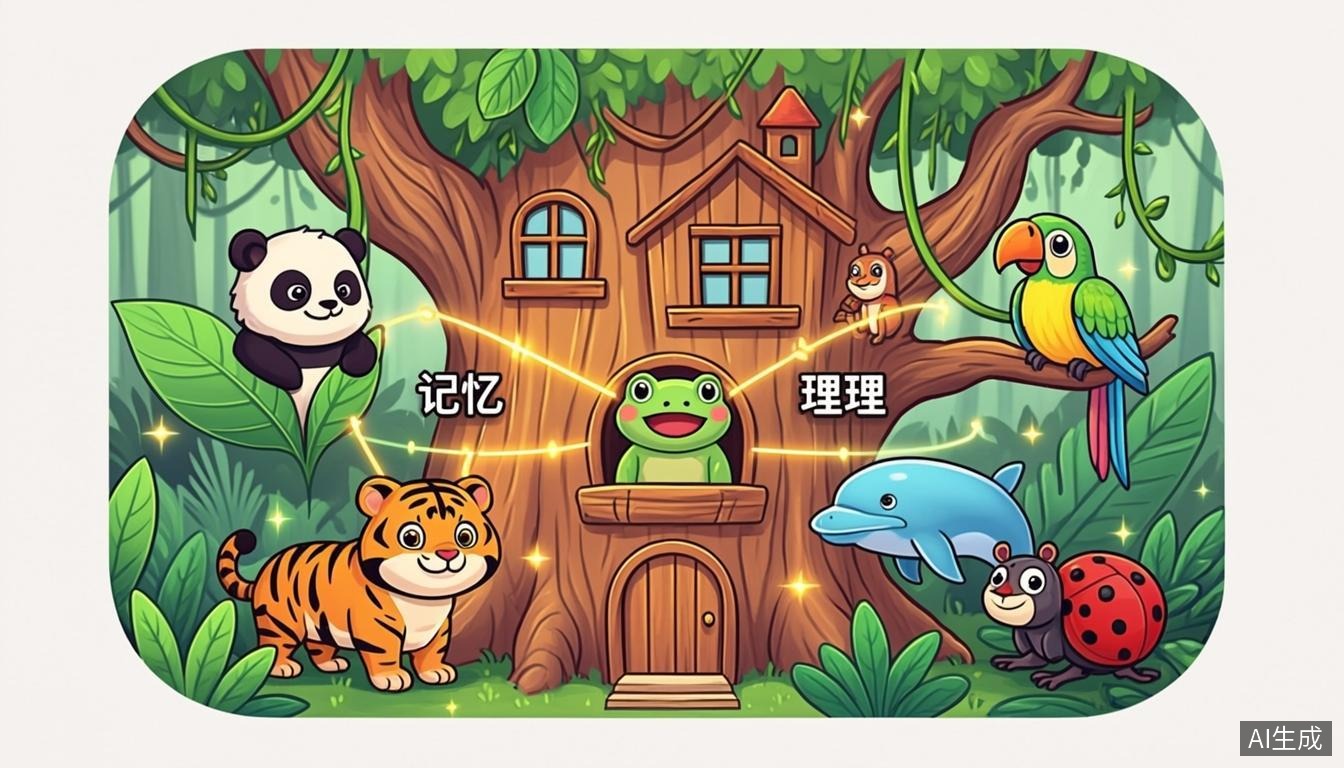
Animal Match Game: Strengthen Memory and Vocabulary
The Animal Match Game is a delightful way for children to explore animals while improving their memory and thinking skills. In this game, players match animal images with their correct pairs or names, helping them learn new vocabulary in an engaging way.
As children play, they develop focus and attention to detail. Remembering where each animal is located strengthens their visual memory and concentration. At the same time, they become familiar with a wide variety of animals, from pets to wildlife.
This game combines learning and fun, making it perfect for early learners. The colorful visuals and simple gameplay keep children motivated, while repetition reinforces knowledge. Animal Match helps build confidence and curiosity, turning learning into an exciting adventure.
🎨 Animal Match
Match each animal with its correct name!
Beginner • Vocabulary📚 Learning About Animals
Animals are amazing creatures that live all around the world! Some animals live on farms, like cows and chickens. Others live deep in the ocean, such as dolphins and fish. You can find cats and dogs in many homes because they make wonderful pets. Birds fly high in the sky, while frogs jump near ponds. Learning animal names in English is a great way to build your vocabulary. In this game, you will match each animal picture with its correct English name. Pay attention to the spelling and try to remember each word. The more you practice, the better you will become. Let’s start learning and have fun!
Amazing Work!
You matched all the animals correctly!
“Practice makes perfect!”
Animal Match Game – Learn English Vocabulary Through Play
Match animal pictures to their English names and build vocabulary, memory, and confidence in a way that feels like play, not study.
Why Animal Match Is a Fantastic Starting Point for English Learners
I have been teaching English to young learners for over a decade, and the most effective vocabulary lessons never feel like lessons. Animal Match on ABCyelp gets this right. It presents children with animal pictures and asks them to match each one to its correct English name. Simple? Yes. Powerful? Absolutely.
The skill at the heart of this game is receptive vocabulary acquisition — seeing a word and connecting it to meaning. For beginners at the A1 level, this is the foundation everything else is built on. Before you can spell or use a word, you need to recognize it. Animal Match drills that recognition using something children already love: animals.
Game-based learning works for beginners because it removes pressure. There is no red pen, no failing grade. When a child taps the wrong name, the game simply lets them try again. Hesitant students become eager participants the moment a matching game appears on screen.
Learning Objectives
When I introduce Animal Match, these are the outcomes I target:
- Vocabulary retention: Pairing images with names anchors words in visual memory, making them stick longer than flashcard drills.
- Spelling improvement: Reading each name carefully builds familiarity with patterns like the double “E” in “deer” or the silent “E” in “horse.”
- Word recognition: Speeding up the matching process trains learners to recognize English words at a glance.
- Memory development: Remembering which names belong to which animals exercises visual and associative memory.
- Reading comprehension foundations: Connecting a word to a picture is the earliest form of comprehension — understanding that written symbols carry meaning.
- Critical thinking: When names look similar (“cat” vs. “rat”), students must analyze differences rather than guess.
- Confidence building: Completing a round and seeing a good score gives beginners tangible proof of progress.
How the Game Works
The screen is split into two columns. On the left, animal pictures. On the right, English names. Tap an animal, then tap its matching name. A correct pair locks in and earns points. A wrong try? Simply try again.
Each round has 4 animals, with 3 rounds total — 12 matches per game. The game tracks score, correct matches, and wrong attempts, with a progress bar showing how far along you are.
After all three rounds, a results screen celebrates your achievement and shows your final score with a message like “Practice makes perfect!” This positive reinforcement matters enormously for young learners. It turns the experience into something they want to repeat.
Replay value comes from animal variety — pets like cats and dogs, wild animals like elephants and monkeys. Each playthrough introduces different words, and that repetition makes the vocabulary stick.
English Concepts Practiced in Animal Match
Beneath the cheerful pictures, several important English concepts are being practiced at once.
Vocabulary Through Visual Association
The core concept is linking a written word to a concrete image — what we call semantic mapping. When a child sees an elephant and selects “ELEPHANT,” they build a direct brain connection between the English word and the concept, bypassing their native language. I always encourage students to think in pictures, not translations, and this game trains exactly that habit.
Word Recognition and Spelling Patterns
Matching requires careful reading, and spelling awareness develops naturally. Students notice that “monkey” begins with “M,” that “elephant” has the “PH” pair, and that “cat” and “dog” follow a consonant-vowel-consonant pattern. After several rounds, my students spell these words correctly without ever being asked to memorize them.
Noun Vocabulary and Article Usage
Every word in the game is a countable noun, which gives teachers a natural opening to introduce articles (“a cat,” “an elephant”) and plurals (“cats,” “elephants”). I follow up a round by asking students to put each word into a sentence using the correct article. The game provides the vocabulary; the teacher extends it into grammar.
Phonics and Pronunciation Awareness
I always have students say each word aloud as they match. Saying “monkey” practices the opening vowel sound. Saying “elephant” reinforces the “PH” digraph and three-syllable stress patterns. These pronunciation moments happen organically when you ask students to read each name aloud.
Context Clues and Process of Elimination
When unsure, students use process of elimination — if “cat” and “dog” are matched, remaining names must go with remaining pictures. This basic context-clue reasoning transfers directly to tackling unfamiliar words in reading.
Difficulty Levels and Adaptations
Beginner (A1)
This is the game’s natural level. A1 students can jump right in. Encourage them to say each word aloud as they match. I often sit with beginners and repeat the word, gently correcting pronunciation. Pair them with a stronger student for support. Celebrate every correct match, no matter how long it takes.
Elementary (A2)
For students who already know basic animal names, add challenges. After matching, ask them to spell each word from memory. Have them write a sentence: “The elephant is big.” Set a time limit to push faster recognition. Or cover the word column and ask students to name each animal from the picture before uncovering to check.
Intermediate (B1)
At this level, Animal Match becomes a springboard. Ask students to classify animals (mammals, reptiles, birds) and explain reasoning in English. Challenge them to use comparatives: “An elephant is bigger than a monkey.” Have them research an animal and present three facts. The game anchors vocabulary; follow-ups push grammar and speaking.
Real Learning Benefits
Here is what I have observed in my students after regular use:
- Active recall and memory reinforcement: Each match requires retrieving the word from memory. That retrieval strengthens the connection, and with repeated play, recall becomes effortless.
- Visual memory development: Associating images with words builds dual coding — the word is stored as both text and visual memory. Dual coding is one of the most effective strategies for long-term retention.
- Focus and concentration: Matching requires sustained attention. Young learners who struggle during worksheets often maintain focus because the interaction keeps their minds engaged.
- Independent learning: Once a child understands the tap-to-match mechanic, they can play entirely on their own, building confidence and self-direction.
- Confidence building: Small, immediate rewards accumulate into genuine confidence. Quiet students volunteer to play in front of the class after building confidence through private practice.
Teacher Tips for Using Animal Match in the Classroom
I like to use this game when I introduce an animal-themed unit. I project it on the board before any formal teaching. It activates prior knowledge — students who already know some names get to show off, and those who do not pick them up from visual cues. By the time I open the textbook, half the vocabulary is already familiar.
One strategy that works well in my classroom is “Match and Speak.” After each correct match, the student must use the animal name in a full sentence: “This is a cat.” or “I can see a monkey.” It takes 30 extra seconds per match but transforms a vocabulary exercise into a speaking activity.
- Warm-up: Start lessons with a quick two-round game. It takes under five minutes and gets students thinking in English immediately.
- Revision: Before a vocabulary quiz, play Animal Match as a low-stress review. Anxious students relax when review feels like a game.
- Pair work: One student plays while the other watches and coaches. Then they switch. Both stay engaged.
- Classroom competition: Divide the class into teams. Each team plays one round; fewest wrong matches wins. Energy goes up without adding pressure.
- Homework: Assign one full game. Ask students to write down all 12 animal names and draw a picture next to each. This extends visual association beyond the screen.
- Differentiated instruction: For struggling learners, model the thinking aloud. For advanced learners, challenge them to complete the game with zero wrong matches.
Parent Guide: Helping Your Child Learn with Animal Match
Let your child play a round alone first. Watch how they approach it. If they hesitate, ask, “What animal is that? What sound does it make?” Thinking about the animal often triggers the word.
Ten minutes of Animal Match beats ten minutes of passive video. A good routine: one game before school, one after. Keep sessions short and positive — when your child wants to stop, let them. Forcing extra rounds turns play into work.
After playing, ask simple questions: “Which animal did you match first?” “Can you spell cat?” “What is your favorite?” These conversations reinforce vocabulary and show your child you value their effort. Celebrate their score, not perfection. If they got 10 out of 12, that is genuine progress. Praise the effort, and they will want to keep learning.
Frequently Asked Questions
What age is Animal Match designed for?
Children aged 4 and up enjoy it. Younger ones can match with guidance; older ones benefit from the spelling and vocabulary practice. Even adult beginners find it a useful, low-pressure way to learn basic English nouns.
How many animal words will my child learn?
Each game covers 12 animals. With regular play over a week or two, most children learn 20 to 30 names because the word pool rotates. Repetition across multiple days produces the best results.
Can this game help with reading skills?
Yes. Matching a word to a picture is the first step in learning to read English. Children practice scanning text, recognizing letter patterns, and understanding that written words represent real things.
How does this compare to flashcards?
Animal Match is more effective because it requires active decision-making. Students must choose the correct answer, engaging recall rather than passive recognition. The interactive element also sustains attention longer than flipping through cards.
Can I use Animal Match for test preparation?
Definitely. If your child has a vocabulary test on animals, playing several times before the test is an excellent review. The visual format makes it less stressful than traditional studying.
Does the game teach animal sounds or habitats?
The core game focuses on names and pictures. Teachers and parents can extend the learning with follow-up questions about sounds, habitats, and characteristics. The game anchors vocabulary; the conversation adds depth.
Related Games You Might Enjoy
If Animal Match is helping your learner build vocabulary, try these related activities on ABCyelp:
Match fruit pictures to their names and expand food vocabulary.
Explore rooms and household items while learning home vocabulary.
Build food vocabulary with fast-paced matching and naming challenges.
Learn body parts and health vocabulary through interactive play.
Ready to Start Matching?
Open Animal Match and watch your child connect pictures to English words, build memory skills, and gain confidence one match at a time. It only takes a few minutes, and the vocabulary stays with them long after the screen goes off.
Play Animal Match NowTable of Contents
Toggle





Leave a Reply