
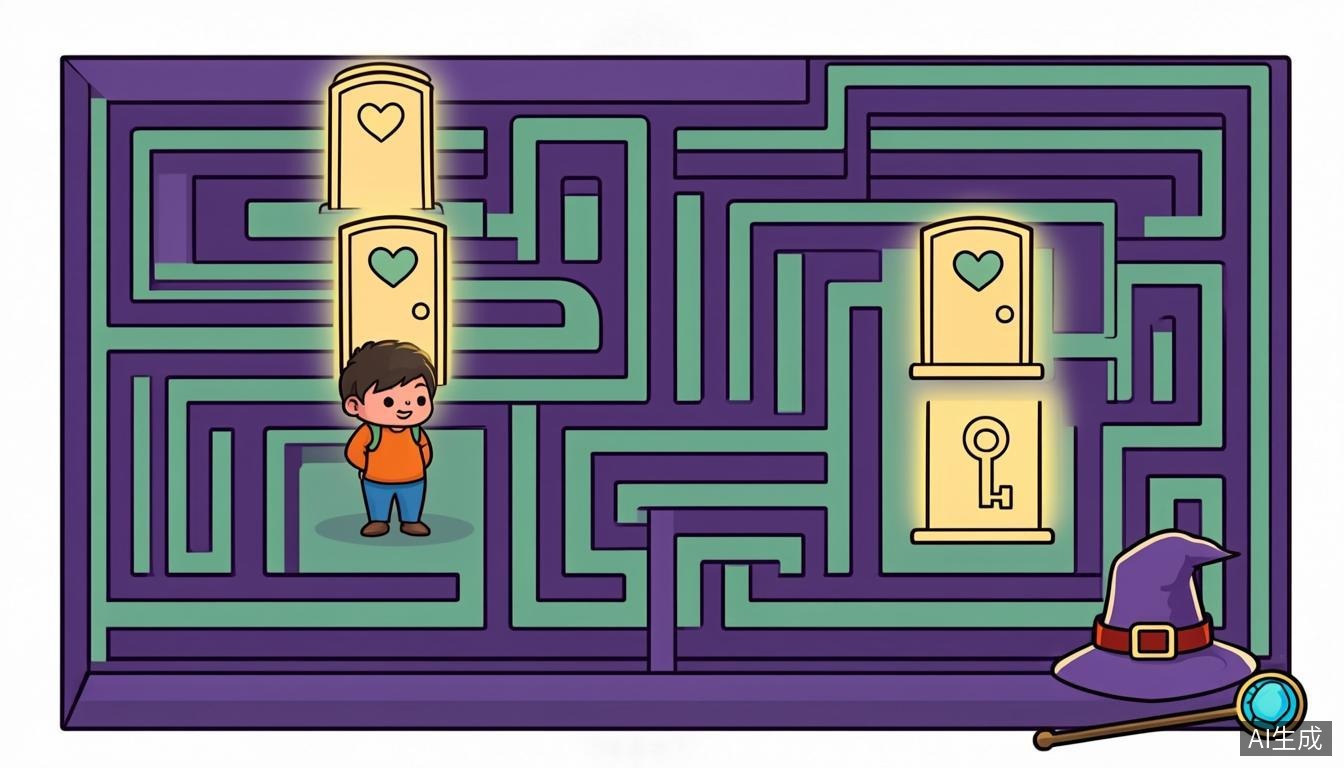
Maze Runner
Navigate the maze, collect English words, and escape!
📚 How Mazes Help You Learn English
Maze games are a fantastic way to build your English vocabulary while having fun. As you navigate through the maze, you discover hidden words at every turn. Each word you collect becomes a new piece of your English puzzle. This hands-on approach keeps your brain active and engaged, which helps you remember words much better than just reading them in a list. Mazes also teach you problem-solving and logical thinking skills that are important for mastering any language. The excitement of finding the way out motivates you to keep going and keep learning. So start exploring, collect every word, and watch your vocabulary grow!
🎮 How to Play
- Use Arrow Keys (desktop) or the D-Pad (mobile) to move through the maze.
- Collect the glowing golden word gems scattered along the path.
- Reach the red flag at the exit to complete the level.
- Collect words and finish fast for a higher score and more stars!
- Every word you find is added to your vocabulary collection.
Maze Runner: The English Word Adventure That Turns Vocabulary Into an Exploration
A teacher’s honest look at how maze-based gameplay helps students discover, collect, and remember new English words
Why Maze Runner Is More Than Just a Game
I’ve been teaching English for over a decade, and getting students genuinely excited about vocabulary is one of the hardest things I do. Flashcards get old fast. Word lists feel like chores. But when you hand a student a maze where every turn reveals a new English word they must collect to escape, something shifts. The learning stops feeling like an assignment and starts feeling like an adventure.
Maze Runner teaches English vocabulary through active exploration, and the skill at its core is vocabulary acquisition, arguably the most important building block for language learners. Game-based learning works because it taps into intrinsic motivation. Students aren’t memorizing words because I told them to; they’re collecting them because they need those words to escape the maze. Research consistently shows that when learners encounter vocabulary in meaningful, interactive contexts rather than isolation, they remember it longer and use it more accurately.
What Students Actually Learn
When I use Maze Runner in my lessons, I’m not just filling time. This game addresses several learning objectives simultaneously:
- Vocabulary retention: Each word collected is added to a personal list, giving students repeated exposure and a tangible record of what they’ve learned.
- Spelling improvement: Seeing words displayed as collectible items reinforces correct letter sequences, especially for visual learners.
- Reading fluency: Players must quickly read and recognize words as they navigate, building rapid word identification skills.
- Word recognition: The game trains students to identify English words on sight, essential for moving beyond slow decoding.
- Critical thinking: Deciding which path to take and which words to prioritize encourages strategic planning.
- Communication skills: In pair or group settings, students naturally discuss routes and word meanings, building conversational confidence.
How to Play Maze Runner
The concept is straightforward, which is one reason I like it. Students navigate a character through a maze, collecting glowing golden word gems along the paths, then reach the red flag at the exit to complete the level. On desktop, use arrow keys; on mobile, there’s an on-screen D-pad. The controls are responsive enough that even younger learners can jump right in.
Each level tracks score, moves, and time. Words you collect are added to your vocabulary list, and the game counts how many you’ve found out of the total. Finishing faster with fewer moves and more words earns a higher score and more stars across three difficulty tiers: Easy, Medium, and Hard. I’ve watched kids replay levels just to earn that third star.
You win by reaching the exit flag, but the real achievement is collecting every word gem before you do. The “New Maze” option generates fresh puzzles with different vocabulary. That replayability is gold from a teaching perspective.
The English Concepts Behind the Game
This is the section I care about most, because understanding what’s happening educationally makes the difference between using a game as a time-filler and using it as a genuine learning tool.
Vocabulary Acquisition Through Contextual Discovery
The core mechanic of Maze Runner mirrors a well-established principle in second language acquisition: words learned in context are retained far better than words studied in isolation. When a student finds a word gem, they’re discovering it as part of an active experience. Their brain tags that word with spatial and emotional context, creating a stronger memory trace. Students who play before a vocabulary quiz consistently outperform those who only studied a traditional word list.
Word Recognition and Sight Vocabulary
As students navigate, they must quickly identify whether a word gem is one they’ve already collected or a new find. This rapid visual processing builds sight vocabulary, the pool of words a reader can recognize instantly without sounding them out. The more words a student recognizes on sight, the more cognitive resources they have for comprehension.
Spelling Patterns and Orthographic Awareness
Although primarily a vocabulary game, the visual display of words reinforces correct spelling. Students see each word as a collectible object, and the vocabulary list lets them review after each level. For learners who struggle with spelling, this repeated visual exposure helps internalize common English spelling patterns naturally.
Context Clues and Meaning Inference
When students encounter an unfamiliar word, they’re motivated to figure out what it means. Sometimes a word’s placement near related terms provides a clue; other times, students ask a partner or look the word up. This self-directed curiosity mirrors the meaning-inference skills that strong readers use constantly. Maze Runner doesn’t teach context clues explicitly, but it creates conditions where students practice them organically.
Adapting Maze Runner for Every Level
Beginner (A1-A2)
At the Easy level, the maze is simpler and the vocabulary consists of high-frequency, concrete words. I often use Easy with students just starting their English foundation. I recommend playing alongside beginners the first time, helping them read each word aloud as they collect it.
Intermediate (B1-B2)
Medium difficulty introduces more complex maze layouts and challenging vocabulary. One adaptation I use at this level is having students write a sentence for each word they collect before starting the next maze, taking the activity from passive recognition to active production.
Advanced (C1)
The Hard setting features intricate mazes and sophisticated vocabulary. I challenge advanced students to categorize collected words by part of speech, find synonyms, or use as many collected words as possible in a single paragraph. These extensions turn a simple collection game into a rich language exercise.
The Real Benefits Students Get From Playing
Beyond vocabulary, Maze Runner supports several cognitive areas I’ve observed firsthand:
- Active recall: Every time a student spots a word gem and reads it, they’re practicing active recall rather than passive recognition, embedded in something students actually enjoy.
- Memory reinforcement: Spatial navigation, visual display, and the reward of collecting each word create multiple memory pathways. Students encounter words as part of an experience their brain wants to remember.
- Focus and concentration: Students who struggle during traditional lessons often demonstrate remarkable focus in a maze, because constant decision-making keeps their brain engaged.
- Independent learning: Once students understand the controls, they can play and learn on their own, building self-direction and confidence.
- Confidence building: There’s a genuine sense of accomplishment when a student escapes the maze with a full collection. That feeling carries over into other areas of language learning.
How I Use Maze Runner in My Classroom
Over the years, I’ve developed strategies that maximize this game’s educational value.
Warm-Up and Pair Work
I like to use Maze Runner as a five-minute warm-up. I project the game, call students up one at a time to navigate for thirty seconds each, and have the class read collected words aloud together. For pair work, I pair a stronger reader with a developing one. The stronger reader navigates while the developing reader reads each word aloud, then they switch. Both benefit from the supported interaction.
Classroom Competition
I occasionally run a “Maze Championship” where small groups compete to collect the most words in a set time. Each member must define or use at least one word from their collection in a sentence. The competition drives engagement, but the sentence requirement ensures real learning happens beyond the screen.
Homework and Differentiated Instruction
I often assign Maze Runner as optional homework, asking students to write down five words and use each in a sentence. Parents appreciate that the screen time has a clear educational purpose. The three difficulty levels make differentiation straightforward: I can assign Easy mazes to students who need foundational work and Hard mazes to those ready for a challenge, all within the same lesson plan.
A Guide for Parents: Supporting Learning at Home
If your child is playing Maze Runner at home, here are some ways to turn screen time into genuine learning time.
Sit down and watch them play. When they collect a word, ask what it means or if they can use it in a sentence. Simple prompts encourage deeper thinking about vocabulary.
Maze Runner is designed for short sessions, typically five to ten minutes per maze. I’d suggest playing two or three mazes, then switching to a non-screen activity. The vocabulary list at the end is a great bridge: have your child read their collected words to you, then use a few in conversation over dinner.
Celebrate the words your child collects, not just the maze they complete. If they escape but only found three words, that’s still three new words. Children who feel successful are far more likely to keep engaging with English learning voluntarily.
Frequently Asked Questions
Is Maze Runner suitable for young children?
Yes. The Easy difficulty uses simple vocabulary and straightforward maze layouts that work well for children as young as six or seven, provided they can read basic English words. The arrow key controls are intuitive enough that even early elementary students can navigate after a brief demonstration.
Can Maze Runner replace traditional vocabulary instruction?
I wouldn’t use it as a complete replacement. Maze Runner is an excellent supplement that builds word recognition and motivation, but students also need explicit instruction in word meanings and usage. Think of it as one powerful tool in a balanced approach.
Does the game work on tablets and phones?
Yes. The mobile version includes an on-screen D-pad for navigation, so students can play on any device with a web browser. The touch controls are responsive and well-suited for smaller screens.
How long should a student play in one sitting?
I recommend sessions of ten to fifteen minutes. That’s long enough to complete one or two mazes and collect a meaningful set of words, but short enough to maintain focus. Short, frequent sessions are more effective for retention than occasional marathon plays.
Is the vocabulary aligned with any curriculum?
The game’s vocabulary spans CEFR levels A1 through B2. The words are practical, high-frequency terms that appear across most standard English language programs.
Related Games You Might Enjoy
If Maze Runner is a hit with your students, these other educational games on ABCyelp offer complementary learning experiences:
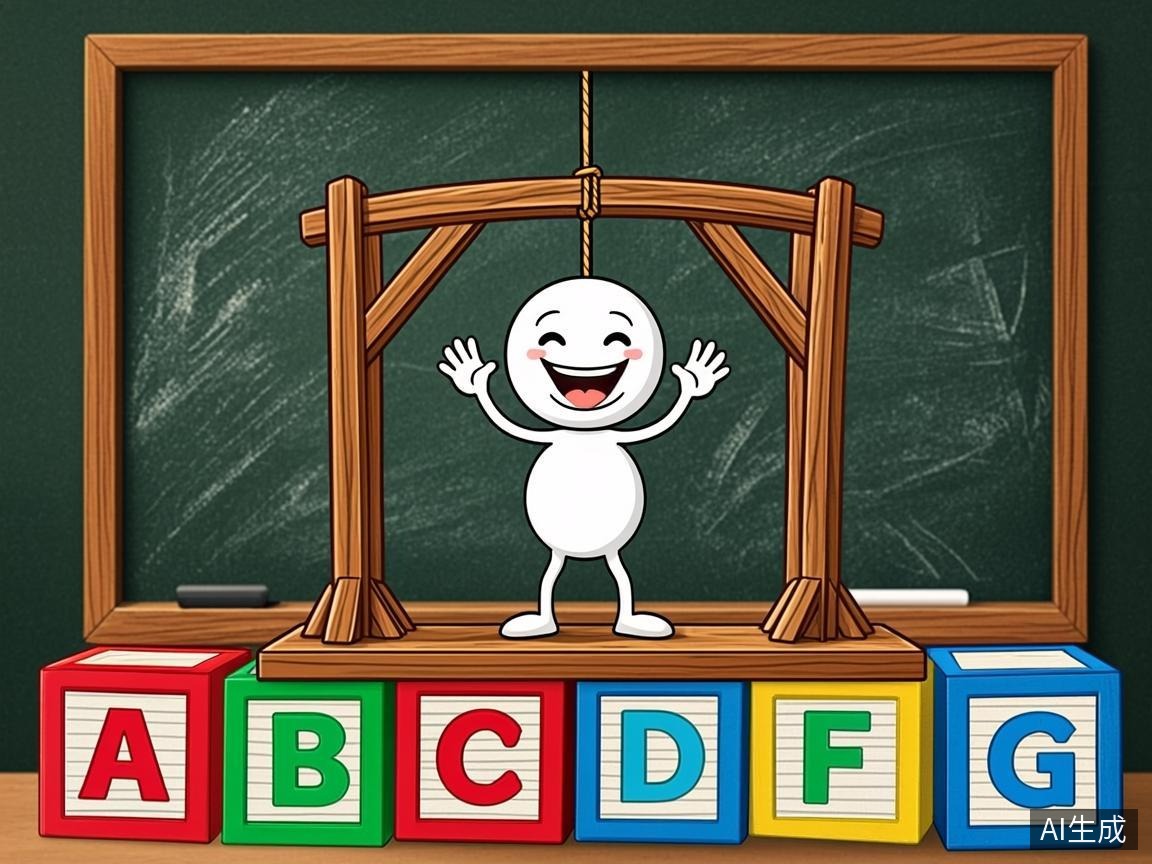
- Hangman – English Word Guessing Game — A classic word-guessing game that builds spelling awareness and letter-pattern recognition.
- Speed Math – Fun Math Learning Game — Fast-paced arithmetic challenges that sharpen mental math skills alongside English number vocabulary.
- Doodle Pad – Digital Whiteboard for Creative Learning — A creative drawing tool that supports visual vocabulary practice and collaborative activities.
Ready to Explore the Maze?
Give your students or your child an English learning experience they’ll actually ask for. Navigate the corridors, collect the words, and watch vocabulary grow one gem at a time.
Play Maze Runner NowTable of Contents
Toggle






Leave a Reply