THE COMPLETE GUIDE TO ENGLISH LISTENING: RULES, COMMON MISTAKES & PROVEN LEARNING STRATEGIES
English listening can feel overwhelming, fast‑paced, and tricky to master — even for advanced learners. Many students struggle with native accents, connected speech, unclear pronunciation, and background noise that makes everyday conversations hard to follow.
The good news is that listening is a skill that sharpens with targeted practice and proven learning methods. This guide breaks down key listening rules, common learner errors, speed‑boosting techniques, and expert‑backed strategies for kids, adults, ESL students, and exam‑focused learners.
Whether you want to understand casual conversations, prepare for listening exams, help your child build auditory skills, or follow fast‑spoken native English, this page delivers practical, easy‑to‑use methods that get real results.


Last Updated: May 2026
Reviewed By: Literacy Education Specialist
Reading Time: 14 minutes
Suitable For: Students, adults, teachers, ESL learners, and parents
The Complete Guide to English Listening
- 1. Why English listening is difficult
- 2. The most important listening rules and patterns
- 3. Common listening mistakes learners make
- 4. How to improve listening skills faster
- 5. Listening tips for kids and adults
- 6. ESL listening strategies
- 7. Listening comprehension for different accents
- 8. Listening test and exam preparation tips
- 9. Frequently asked questions about English listening
The Complete Guide to English Listening Skills
Everything I have learned about teaching listening after more than a decade in the classroom — from why it feels so hard to how any learner can get dramatically better with the right practice.
Why Listening Is the Skill Everyone Struggles With
I want to be honest about something. In all my years of teaching English, listening is the skill my students complain about more than any other. Not grammar. Not writing. Listening. And I totally understand why — when someone speaks English at you at normal speed, the words blur together, accents throw you off, and before you have decoded the first sentence, the speaker is already three sentences ahead. It can feel absolutely exhausting.
The thing is, listening is not just “hearing words.” It is an active, cognitively demanding process. Your brain has to decode sounds, match them to meaning, hold that meaning in working memory, and simultaneously process the next chunk of speech. That is a lot happening at once. And unlike reading, you cannot slow down or replay — the speaker controls the pace, not you. That loss of control is a big part of what makes listening feel so stressful.
But here is what gives me hope: listening is absolutely trainable. I have watched students go from understanding almost nothing in a conversation to following full-speed native speech. The difference was never talent. It was always method — specific, targeted practice with the right kind of input. That is exactly what this guide is for.
What Students Usually Struggle With
After working with hundreds of learners, I keep seeing the same obstacles come up. Let me walk through the big ones so you can recognize your own challenges.
Connected Speech
This is the number one complaint I hear. Native speakers do not say “What are you going to do?” They say “Whatcha gonna do?” Words blend, sounds disappear, and what you hear does not match what you learned in a textbook. “Next door” sounds like “neck store.” This is not sloppy speech — it is natural English, and your ear has to be trained for it.
Speed
Many learners tell me they understand their teacher just fine but cannot follow real conversations. Teachers naturally slow down and articulate. Real-world English is faster, less predictable, and full of interruptions. The jump from classroom to real listening catches people off guard.
Accents and Varieties
You learned American English in class, then someone from Scotland starts talking and you feel lost. British, Australian, Irish, South African — English has enormous accent variation. Advanced students can still derail with an unfamiliar accent, even when their grammar and vocabulary are strong.
Background Noise and Context
In a quiet classroom, listening is manageable. In a restaurant, on a phone call, or at a party, it becomes far harder. Your brain must filter out noise while decoding speech, and that dual demand overwhelms many learners.
Mental Fatigue
One thing nobody talks about enough: listening in a second language is genuinely tiring. Your brain works much harder than a native speaker’s doing the same task. After twenty minutes, many learners simply shut down. That fatigue is real — not a sign of weakness, but of effort.
Complete Listening Learning Roadmap
This is the progression I use with my students. It is not about rushing to the hardest level — it is about building layer by layer so that each stage feels achievable.
Stage 1: Sound Awareness (Beginner / A1)
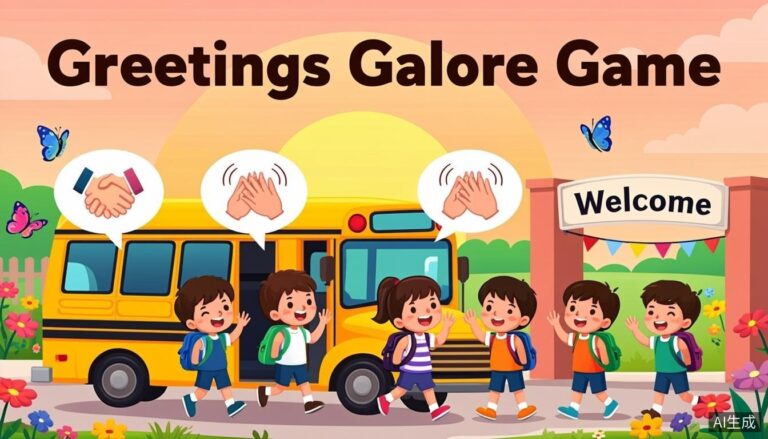
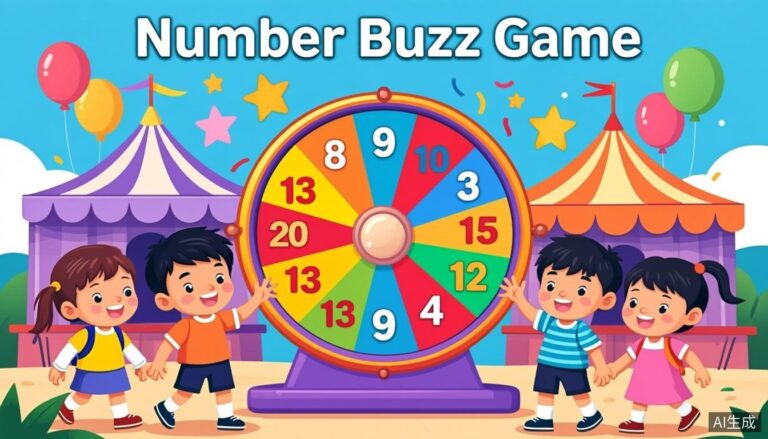
Focus on recognizing individual words, basic greetings, numbers, and simple instructions. Your goal is to identify sounds, not understand everything. Games like Greetings Galore and Number Buzz are perfect here.
Stage 2: Pattern Recognition (Elementary / A2)
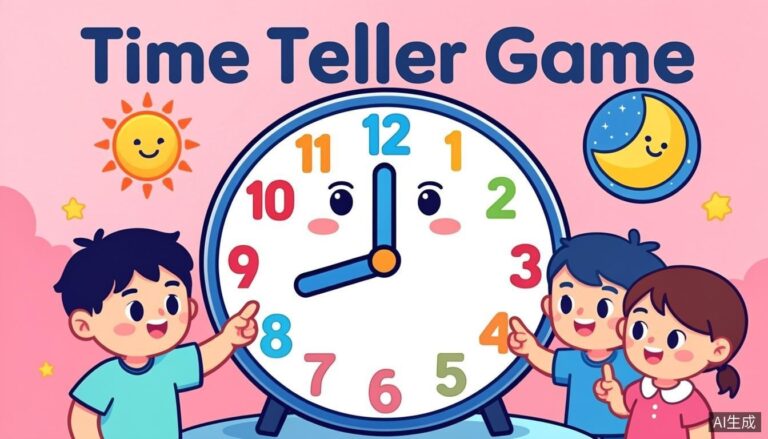
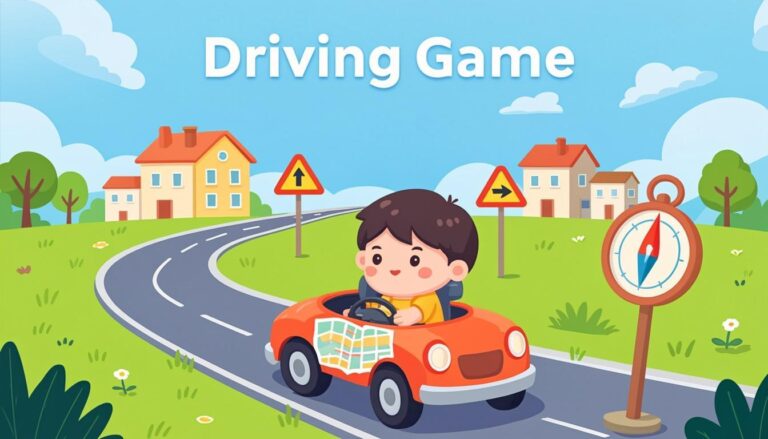
Start hearing common phrases and time expressions. Practice following short directions and understanding routine exchanges. Time Teller and Directions Driver target these skills directly.
Stage 3: Meaning Extraction (Intermediate / B1)
Move from hearing words to extracting meaning. Practice summarizing, identifying main ideas, and distinguishing fact from opinion. This is where Story Summary and Radio Reality become valuable.
Stage 4: Critical Listening (Upper-Intermediate / B2+)
Analyze complex input — news broadcasts, discussions with multiple speakers, nuanced opinions. You are not just understanding; you are evaluating, comparing, and forming judgments. News Breaker is designed for this level.
Core Listening Concepts Explained
Top-Down vs. Bottom-Up Processing
Bottom-up processing means building meaning sound by sound, from the ground up. Top-down processing means using what you already know — context, expectations, background knowledge — to predict and fill in what you miss. Most learners rely too heavily on bottom-up, trying to catch every word. That is exhausting. Strong listeners use top-down processing constantly: predicting, guessing from context, and checking against expectations. Teaching this is one of the fastest ways I know to improve listening.
Connected Speech Rules
Here are the main connected speech patterns I teach:
| Pattern | Example | What It Sounds Like |
|---|---|---|
| Linking | “an apple” | “a-napple” |
| Elision (sound dropped) | “next day” | “nex-day” |
| Assimilation | “don’t you” | “don-chu” |
| Weak forms | “can” in “I can go” | “I c’n go” (barely heard) |
| Intrusion | “go away” | “go-w-away” |
Once students realize that “not hearing” a word often means it was swallowed by connected speech, something clicks. They stop blaming their ears and start listening for meaning.
Listening for Gist vs. Listening for Detail
Sometimes you need the big picture (gist) and sometimes a specific fact (detail). Knowing which changes your strategy. Gist listening means relaxing attention and catching the overall flow. Detail listening means focusing sharply on particular words or numbers. I teach students to ask before listening: “Do I need the general idea or specific information?” That single question makes listening far more efficient.
Teacher Tip
One exercise I love: play a short clip twice — first for the main idea, then for three specific details. Debriefing after each round shows students how differently they listen depending on their goal. It is a lightbulb moment.
Interactive Listening Games on ABCYelp
I use these games regularly because they target specific listening sub-skills in a way that feels like play, not work. Here is a breakdown of each one and how I use it.
Greetings Galore
Beginner A1Students listen to common greetings and respond appropriately. I use this on the very first day with new beginners because it builds confidence immediately. Hearing “Good morning, how are you?” and selecting the right response is surprisingly motivating for someone who has never studied English before. The game trains both recognition and appropriate response — which is the foundation of real conversation.
Number Buzz
Beginner A1Number recognition is harder than people think, especially with teens (thirteen vs. thirty) and large numbers. I have seen intermediate students still stumble over these. Number Buzz drills listening for numbers in a game format that removes the anxiety of a quiz. I like to use it as a quick warm-up before any lesson that involves quantities, prices, or dates.
Time Teller
Elementary A2Telling time in English involves specific phrases — “quarter past,” “ten to,” “half past” — that do not translate directly from many languages. This game trains students to hear and interpret those phrases accurately. I pair it with a speaking activity where students ask each other the time, creating a complete listening-speaking cycle.
Directions Driver
Elementary A2Following spoken directions requires holding information in memory while processing new input — a genuine real-world listening skill. I love this game because it mimics the experience of asking for directions in an unfamiliar city. The spatial element adds an extra cognitive layer that strengthens both listening and mental mapping skills.
Story Summary
Intermediate B1Summarizing requires listening to a passage, identifying the main points, and discarding the rest. That is top-down processing at work. I often use this game as a pre-writing activity: listen, summarize in the game, then write a short paragraph about the same story. The transition from listening to writing feels natural because the comprehension work has already been done.
Radio Reality
Intermediate B1Distinguishing fact from opinion is a critical listening skill that transfers directly to academic work and media literacy. This game trains students to listen not just for what is being said, but for how it is being said — the language signals that indicate opinion versus evidence. I recommend this for any student preparing for IELTS or TOEFL.
News Breaker
Upper-Intermediate B2News audio is dense, fast, and full of specialized vocabulary. This game challenges students to break down complex listening into manageable parts: identifying the lead, understanding the context, and catching key facts. It is the closest thing to real-world high-stakes listening I have found in a game format, and I use it with all my exam-prep students.
Why Game-Based Learning Works for Listening
I used to assign textbook listening homework and half my students skipped it. When I switched to game-based activities, completion rates shot up. Games remove the dread. A game reframes listening effort as a challenge to beat, not a test to fail.
Game-based learning triggers dopamine release on success, strengthening memory consolidation. The immediate feedback loop — try, fail, adjust, try again — mirrors how skill acquisition works neurologically. Passive listening provides no feedback. You listen, feel confused, and move on without knowing what you missed. Games close that gap.
Games also build confidence. Anxious listeners freeze up, making comprehension worse. Games lower the stakes — getting an answer wrong feels like part of playing, not evidence of failure. That psychological safety is crucial for progress.
Recommended Study Method
Here is the weekly listening routine I give my students. It is realistic — about twenty minutes a day — and it works because it balances different types of listening practice.
| Day | Activity | Focus | Time |
|---|---|---|---|
| Monday | ABCYelp listening game | Targeted skill practice | 15 min |
| Tuesday | Short podcast or video | Gist listening | 20 min |
| Wednesday | ABCYelp listening game | Different game from Monday | 15 min |
| Thursday | Dictation exercise | Bottom-up accuracy | 15 min |
| Friday | Conversation practice | Real-time interaction | 20 min |
| Weekend | Movie or TV show in English | Extended listening, enjoyment | 30+ min |
My Number One Study Tip
Do not try to understand everything. Seriously. Pick one thing to focus on each session — maybe connected speech patterns, maybe numbers, maybe identifying the speaker’s opinion — and let the rest flow past you. Targeted listening improves faster than trying to catch every word.
Common Mistakes I See Students Make
Trying to Translate Word by Word
This is the most common mistake I see, and it kills listening speed. By the time you translate the first clause, the speaker is two sentences ahead. English listening requires processing meaning in English, not shuttling back and forth to your first language. I tell my students: if you catch yourself translating, stop, breathe, and refocus on meaning. You will miss the next few seconds, but you will break the habit faster.
Panic-Freezing When You Miss a Word
You miss one word and your brain locks onto it, trying to figure out what it was — meanwhile you miss the next ten words. I see this constantly, especially with exam students. The fix is mental, not linguistic: train yourself to let go. Missing one word rarely changes the overall meaning. Strong listeners keep moving forward. This takes practice, but it is a skill you can develop intentionally.
Only Practicing with Slow, Clear Audio
Textbook audio is clean, slow, and perfectly pronounced. Real English is none of those things. If you only practice with textbook recordings, you are training for a version of English that does not exist outside the classroom. You need exposure to messy, fast, accented, real-world English — even if it feels uncomfortable at first.
Passive Listening Without Focus
Playing English audio in the background while you do other things is not listening practice. It is background noise. I am not saying it has zero value — some exposure is better than none — but it is not a substitute for active, focused listening. Ten minutes of concentrated listening practice beats two hours of passive background audio every single time.
Ignoring Pronunciation
Your listening ability is partly determined by your mental model of how words sound. If your pronunciation is off, you are listening for the wrong sounds. A student who pronounces “comfortable” as “com-FORT-a-ble” will not recognize it when a native speaker says “COMF-ta-ble.” Working on your own pronunciation directly improves your listening, and this is something many learners overlook.
Beginner Listening Guide (A1)
If you are just starting out, the most important thing is to not overwhelm yourself. Listening at the beginner stage should feel achievable. Focus on single words, short phrases, and predictable contexts. Greetings, numbers, colors, days of the week — these are the building blocks. Do not worry about full sentences yet.
I usually recommend starting with Greetings Galore and Number Buzz. Both give you a narrow, manageable set of vocabulary, so your success rate will be high. Early success is everything at this stage.
Listen to the same audio multiple times. Repetition is essential at this level. Your brain needs multiple exposures to map English sounds onto meaning. Do not be afraid to use transcripts — reading along while you listen helps connect written and spoken forms.
Intermediate Listening Guide (B1)
At the intermediate level, your challenge shifts from hearing words to processing meaning in real time. You can catch most individual words, but longer passages still overwhelm you.
Story Summary and Radio Reality are my go-to games for intermediate learners. Story Summary trains you to identify what matters and ignore what does not. Radio Reality pushes you to listen for the difference between fact and opinion, which requires attending to word choice and tone — not just content.
One technique I love: “listen and predict.” Start a short audio clip, pause after the first sentence, and predict what comes next. Then play on to check. This trains top-down processing and keeps you mentally engaged rather than passively receiving input.
Advanced Listening Guide (B2+)
Advanced listeners can understand most clear, standard English. The frontier now is complexity: multiple speakers, unfamiliar accents, dense content, and subtle rhetorical moves like hedging and sarcasm.
News Breaker is the game I use most at this level because news audio is dense, fast, and structured in ways that reward analytical listening. Beyond games, I recommend panel discussions, debates, and interviews with speakers from different regions. Your goal is critical evaluation — can you identify bias? Detect logical gaps? Distinguish evidence from assertion?
I also recommend shadowing: listen to a short clip and repeat it aloud, matching the speaker’s rhythm, intonation, and speed. It is incredibly hard, but forces you to process every sound. My advanced students who shadow regularly improve faster than those who only do comprehension exercises.
Best Practice Activities
- Dictation: Listen to a short sentence and write it down word for word. Start with slow, clear audio and gradually increase speed. This is the single best exercise for bottom-up listening accuracy.
- Listen and Summarize: Hear a one-minute clip, then summarize it in your own words (spoken or written). This trains top-down processing and forces you to prioritize key information.
- Gap-Fill Listening: Take a transcript with key words removed and fill them in while listening. This trains focused attention on specific content while still processing overall meaning.
- Accent Exposure: Find the same content read by speakers from different regions (YouTube is great for this). Listen to each version and note the differences in pronunciation and rhythm.
- Shadowing: Repeat a speaker’s words in real time, matching their pace and intonation. This builds the link between perception and production that strengthens both listening and speaking.
- ABCYelp Game Sessions: Two or three rounds of a listening game at your level, followed by a quick review of any mistakes. Short, focused, and effective.
How Teachers Can Use These Games
I like to use ABCYelp listening games as warm-ups at the start of class. Five minutes of Number Buzz or Time Teller gets students switched into English mode and primes their ears for the lesson ahead. It is low-pressure, everyone can participate, and it sets a positive tone.
For pair work, I have one student listen and the other write down what they hear. Then they swap roles. This creates natural communication and gives both students a reason to listen carefully. With Directions Driver, I project the game on the board and have one student give directions from memory while their partner navigates — it becomes a combined listening and speaking activity.
For homework, I assign a specific game at the student’s level and ask them to play until they achieve a target score. They screenshot their result and send it to me. It takes five minutes, it is genuinely useful, and students actually do it because it feels like a game, not homework.
For differentiated instruction, the CEFR-leveled games make it easy. Struggling students work on A1 and A2 games while stronger students tackle B1 and B2 content. Everyone is practicing the same skill at their own level, which means I do not need to prepare separate materials.
Advice for Parents
If your child is learning English, listening practice at home can make an enormous difference. The key is to keep it short, fun, and regular. Fifteen minutes a day is far more valuable than an hour once a week. Your child’s brain needs repeated exposure to English sounds, not marathon sessions that lead to fatigue.
ABCYelp’s listening games are ideal for home practice because they are structured in short rounds, they provide instant feedback, and they feel like play rather than study. Let your child choose which game to start with — autonomy increases motivation. If they want to play Number Buzz three times in a row, that is fine. Repetition is learning at this age.
One thing I always tell parents: do not test your child. If they get an answer wrong, do not correct them immediately. Instead, ask “What did you hear?” and let them try again. The game itself provides feedback. Your role is to encourage, not to teach. Ask them to teach you — “How do you say the time in English?” — because explaining something to someone else is one of the most powerful learning activities there is.
For screen-time balance, I suggest treating listening games like any other homework: a defined period, followed by something different. Play a round or two, then switch to a non-screen activity like drawing a picture of something from the game or telling a family member what they learned.
Frequently Asked Questions
With consistent daily practice of fifteen to twenty minutes, most of my students notice meaningful improvement within four to six weeks. The change is gradual at first — you will catch yourself understanding a phrase you would have missed before — and then it accelerates. The key is daily practice, not occasional long sessions.
Yes and no. If you are a beginner, English subtitles help you connect spoken and written forms. But if you always use subtitles in your first language, you are reading, not listening. My recommendation: watch once with English subtitles, then watch again with no subtitles. Gradually reduce your reliance on subtitles as your listening improves.
It depends on your level. Beginners benefit from slow, clear, structured audio — like the ABCYelp games or graded listening materials. Intermediate learners should mix structured practice with semi-authentic content like educational podcasts. Advanced learners need authentic, unscripted content: interviews, debates, news, and conversations between native speakers.
Because your teacher modifies their speech — slower pace, clearer articulation, simpler vocabulary, fewer idioms. Movie English is unfiltered: full speed, connected speech, slang, background noise, overlapping dialogue. The gap between classroom English and real-world English is something every learner faces. Bridging it requires deliberate practice with authentic materials, not just classroom listening.
They are both essential, but listening often gets neglected. Reading gives you time to process; listening forces you to process in real time. For spoken fluency, listening is actually more important because you need to understand speech at conversational speed before you can participate in conversations. I always tell my students: strong listening leads to strong speaking.
Interactive games like the ones on ABCYelp are perfect for solo practice because they give you feedback without a partner. Beyond that, podcasts, audiobooks, YouTube, and dictation exercises all work well for independent listening practice. The important thing is to listen actively — take notes, summarize, replay difficult sections — rather than passively.
The ABCYelp games are designed for a wide age range, and I have used them successfully with both children and adult learners. The difference is in how you frame the activity. Children respond to the game mechanics — points, levels, stars. Adults benefit from understanding the skill being practiced and seeing how it connects to their real-world needs. The same game works for both; the scaffolding around it changes.
Exposure is the only real solution. Pick one accent you struggle with and listen to it daily for a week — a news channel, a podcast, a YouTuber from that region. Your brain will start calibrating to the sound patterns. Do not try to master every accent at once. Focus on one, build comfort, then move to the next. Most learners find that once they can handle two or three major accent groups, the others become easier to process.
B1 is the threshold where most learners can follow the main points of a clear, standard conversation. B2 is where you can handle more complex, fast-paced discussions with reasonable comfort. C1 is full conversational fluency, including humor, sarcasm, and cultural references. If you are at A2 and struggling with real conversations, that is normal — you are not there yet, and that is exactly where the ABCYelp A2 games will help you build the bridge.
Keep Going — Your Ears Are Learning Even When It Does Not Feel Like It
Listening improvement is hard to notice day by day. You will have sessions where everything clicks and sessions where nothing does. That is normal. Your brain is building neural pathways that take time to strengthen. What feels like a plateau is often consolidation happening beneath the surface.
I have seen so many students give up on listening right before a breakthrough because they could not feel the progress. Please do not be one of them. Play the games. Listen to the podcasts. Watch the movies with subtitles off sometimes. Let the sounds wash over you even when you do not catch everything. Every minute you spend listening to English — even when it feels frustrating — is a minute your brain is getting better at processing it.
You already understand more than you think. Trust the process. Your ears are learning.
Ready to start training your ears?
Play Listening Games NowFree • No sign-up • Beginner to Advanced
Explore More on ABCYelp
- Vocabulary Games — Build the word knowledge that supports listening comprehension
- Grammar Games — Understand the structures you hear in speech
- Spelling Games — Connect written and spoken English
- Memory Match — Picture-word matching for visual learners
- Hangman — Word guessing for spelling and pattern recognition
- Food Frenzy — Descriptive vocabulary matching
English Listening ESL Listening Practice Listening Comprehension Connected Speech Listening Games CEFR Levels A1 B1 B2 Listening Listening Strategies
Table of Contents
Toggle